
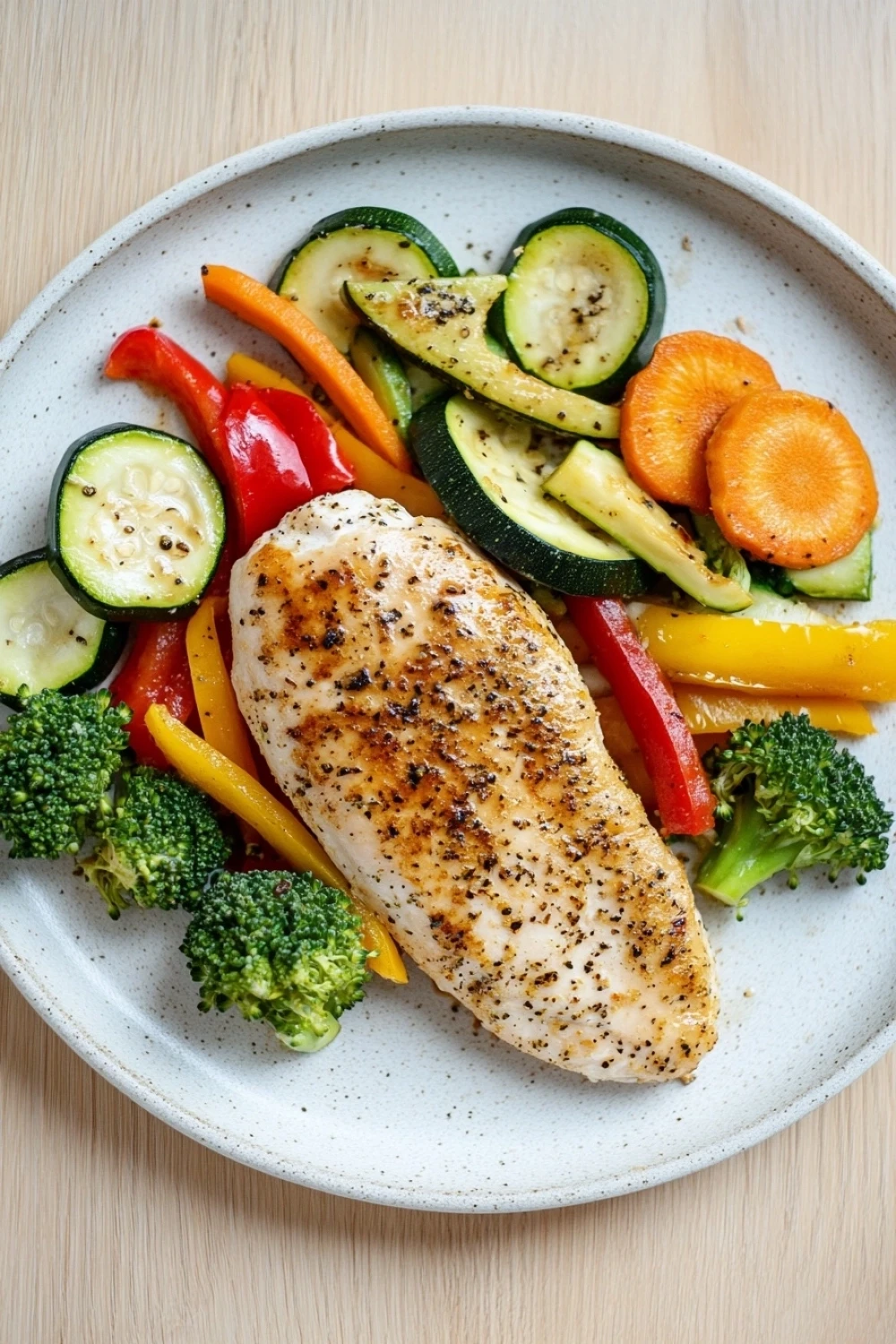
Weeknight chaos? Solved.
There’s something almost primal about the sizzle of chicken hitting a hot pan—a sound that instantly tells you dinner’s on. I remember the first time I nailed a chicken breast and veggie dinner; the kitchen filled with the aroma of garlic and herbs, making me feel like I’d cracked the code to a fast, healthy meal that doesn’t skimp on flavor or texture.
Cooking this dish is like a well-rehearsed dance—first the chicken gets that golden-brown crust, then the veggies join the party, vibrant and crisp, kissed by olive oil and a splash of lemon. No faffing around here; it’s straightforward, fuss-free, and perfect for when you want to eat well but keep it real.
This meal is solid proof that simplicity trumps fancy every time. It’s about getting your hands dirty — in the best way — and cooking something that feels homemade without the usual kitchen faff. Ready to roll up your sleeves? Let’s get to it.
If you’re looking for a hearty chicken breast and veggie dinner, try this Slow Cooker Chicken Orzo Soup: Cozy Crockpot Comfort in a Bowl for a delicious and easy meal.
Real Life Benefits of Chicken Breast and Veggie Dinner
- Quick and straightforward—ready in just over half an hour, perfect for busy weeknights when you’re juggling a million things.
- Lean protein-packed chicken breast keeps you full without dragging you down, ideal for anyone dodging the afternoon slump.
- Rainbow of sautéed veggies adds a punch of vitamins and fiber, making your gut happy and your energy steady.
- One-pan cooking means less cleanup—because who actually enjoys scrubbing pans after a long day?
- The fresh lemon juice splash brightens flavors, proving a little zing can turn a plain dinner into something that feels a bit more special (without the fuss).

Chicken Breast and Veggie Dinner
- Total Time: 35 minutes
- Yield: 4 1x
Description
A healthy and delicious chicken breast and vegetable dinner featuring tender, pan-seared chicken breasts served with a medley of sautéed colorful vegetables.
Ingredients
4 boneless, skinless chicken breasts (about 6 ounces each)
1 teaspoon kosher salt
1/2 teaspoon black pepper
1 teaspoon garlic powder
1 tablespoon olive oil
1 medium red bell pepper, sliced into strips
1 medium yellow bell pepper, sliced into strips
1 medium zucchini, sliced into half-moons
1 medium carrot, peeled and sliced into thin rounds
1 cup broccoli florets
2 cloves garlic, minced
1 tablespoon olive oil
1/2 teaspoon kosher salt
1/4 teaspoon black pepper
1 teaspoon dried Italian seasoning
1 tablespoon fresh lemon juice
Instructions
Pat the chicken breasts dry with paper towels.
Season both sides of the chicken breasts evenly with kosher salt, black pepper, and garlic powder.
Heat 1 tablespoon of olive oil in a large skillet over medium-high heat.
Add the chicken breasts to the skillet and cook for 6-7 minutes on one side without moving them, until golden brown.
Flip the chicken breasts and cook for another 6-7 minutes, or until the internal temperature reaches 165°F (75°C). Remove chicken from the skillet and set aside to rest.
In the same skillet, add 1 tablespoon of olive oil over medium heat.
Add the minced garlic and sauté for 30 seconds until fragrant.
Add the sliced red bell pepper, yellow bell pepper, zucchini, carrot, and broccoli florets to the skillet.
Season the vegetables with 1/2 teaspoon kosher salt, 1/4 teaspoon black pepper, and dried Italian seasoning.
Sauté the vegetables for 7-8 minutes, stirring occasionally, until they are tender but still crisp.
Remove the skillet from heat and drizzle the vegetables with fresh lemon juice, stirring to combine.
Serve the cooked chicken breasts alongside the sautéed vegetables.
- Prep Time: 15 minutes
- Cook Time: 20 minutes
Explore more:
Dinner Recipes
Mastering Your Chicken Breast and Veggie Dinner
The Swap Game: Making This Dish Truly Yours
Listen, we all have that one veggie we either can’t stand or can’t get enough of. Here’s the lowdown: swap out the zucchini for asparagus if you want a bit more snap or toss in some mushrooms for that earthy umami hit. Don’t have bell peppers on hand? No sweat. Use snap peas or even thinly sliced Brussels sprouts—anything that’ll bring some color and crunch. Thinking about the chicken? Go for thighs if you want juicier meat and a bit more forgiveness on the pan. Thighs hold up better if you’re not a master at the sear yet. Just remember—the seasoning mix (kosher salt, pepper, garlic powder) is your anchor, so keep that consistent. The olive oil? Swap for avocado or grapeseed oil if you like a higher smoke point, especially if you plan to crank the heat up. This isn’t just a dinner; it’s a canvas. Don’t get stuck in the “what if” of ingredients—play around and own it.
Why That Sear Matters: Crust Over Chaos
Here’s the kicker—when you slap that chicken on the hot skillet, don’t you dare touch it for 6-7 minutes. Seriously. The temptation to nudge or peek is like trying to keep a secret—it only ruins the magic. That crust you’re after? It’s the Maillard reaction, a fancy term for the chemical love story between amino acids and sugars that happens only when the surface is undisturbed and hot enough. If you fiddle with the chicken, you’ll release moisture, steam the meat, and zap that crust before it even forms. I learned this the hard way; once, I got too curious halfway through cooking and ended up with sad, gray chicken. Trust me, patience pays off—walk away, scroll your phone, but leave the chicken be. Once flipped, the bird will cook through keeping juices locked in. That crust? It’s the line between a meh meal and a “tell me your secrets” dish.
Oops, It’s Dry! How to Rescue Parched Chicken and Soggy Veg
We’ve all been there—dry chicken that tastes like shoe leather and limp veggies that look like they’ve been through a rainstorm. Here’s the fix-it playbook: For the dry chicken, slice it thinly against the grain and toss it back in the pan with a splash of chicken broth or even a quick smear of butter to reintroduce moisture and flavor. Cover it for a minute to steam gently—that’s your moisture reboot. Veggies gone soggy? Next time, crank the heat higher but cut your sauté time down by a minute or two. Meanwhile, if you’re staring at sad, watery veggies post-cook, a quick flash in a hot pan with a drizzle of olive oil and a sprinkle of salt can revive their snap. Also, lemon juice isn’t just for flavor—it acts like a wake-up call, brightening tired vegetables. Toss it in last, and it’ll pull everything together without turning your veggies into mush. Remember, cooking is half science, half street smarts—you gotta read your skillet like a book and adjust on the fly.
Chicken Breast and Veggie Dinner FAQs
Q: Can I use frozen chicken breasts for this recipe?
Yes, you can—but thaw them completely before cooking to ensure even cooking. Leaving them partially frozen will make the outside burn while the inside stays raw. No one wants that drama!
Q: What’s the best way to keep veggies crisp?
Quick sautéing over medium heat is your friend here. You want to keep that snap in the veggies, so don’t overcook. Toss them in when the chicken’s done, season well, and stir often. The secret? Timing is everything—like nailing that perfect beat in a jam session.
Q: Can I swap veggies for others I have on hand?
Absolutely. This dish is like a blank canvas for whatever’s fresh in your fridge. Think green beans, asparagus, or mushrooms. Just keep their cook times in mind to avoid mushy sadness.
Q: Is it necessary to let the chicken rest?
Yes, resting is key. It lets the juices redistribute so every bite is juicy, not dry. I learned this the hard way once—rushing to the plate left me with a sad, tough chicken.
Q: Can I make this gluten-free?
Totally! This recipe is naturally gluten-free as long as you double-check your seasonings and olive oil (some brands can surprise you). Stick to fresh ingredients and you’re in the clear.