
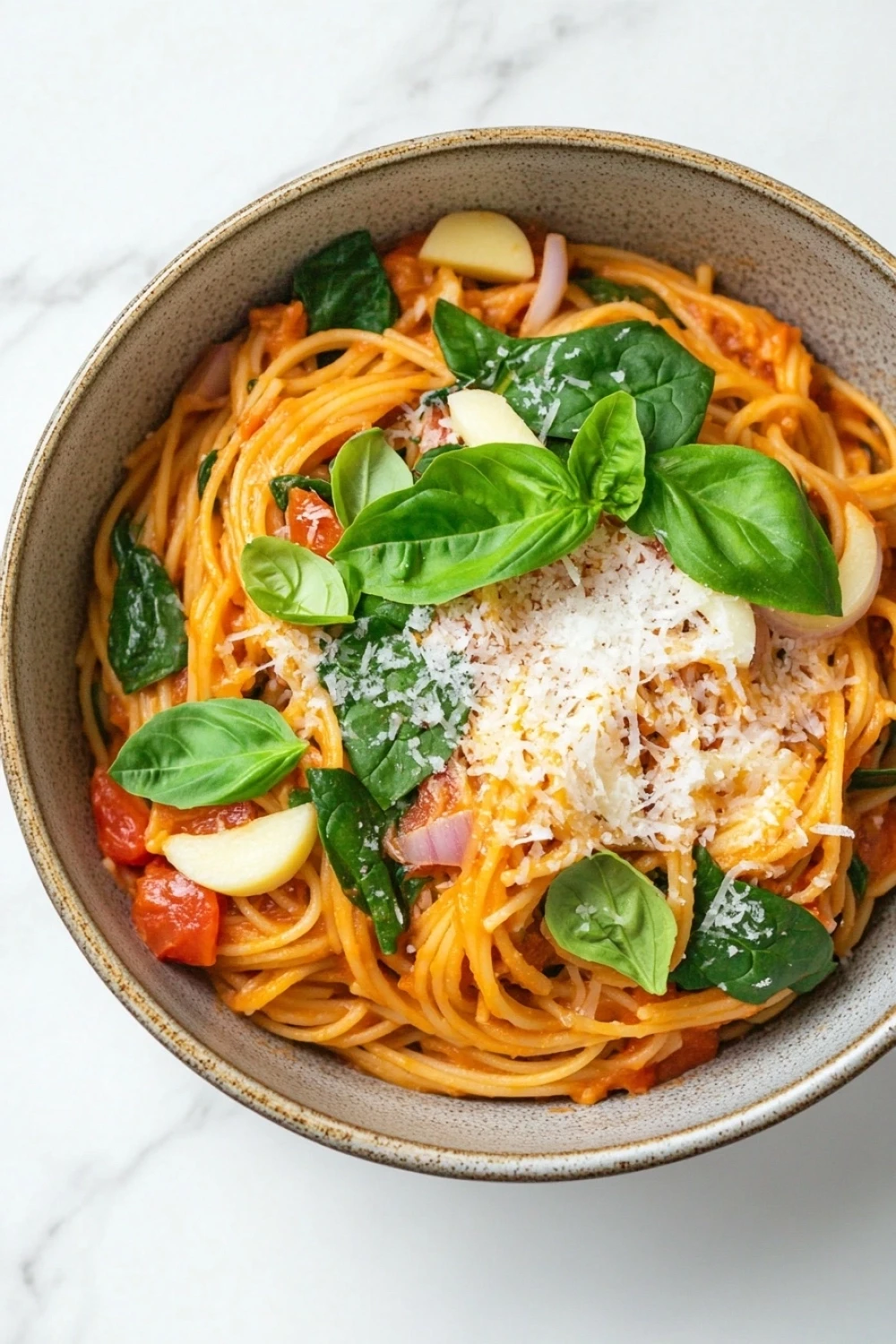
One pot wonder.
There’s something wildly satisfying about tossing everything into a single pot and letting it work its magic. No juggling pans or messy splatters—just pure, unadulterated cooking mojo. The kitchen hums with anticipation as the aroma of garlic and oregano begins to swirl through the air.
I remember the first time I tried this recipe; spaghetti swimming in a sea of crushed tomatoes, bubbling away with basil and spinach folding in like old friends. It’s a dish that’s as straightforward as it is punchy—perfect for those nights when you want something hearty but refuse to be tethered to the stove.
This ultimate one pot pasta hits all the right notes: a touch of heat from crushed red pepper flakes, the mellow bite of Parmesan melting into the sauce, and the fresh pop of greens right at the end. It’s not just a meal—it’s a no-nonsense, flavor-packed ticket to dinner that doesn’t waste time or dirty dishes.
For the ultimate one pot pasta experience, don’t miss our One Pot Garlic Cheesy Chicken Spaghetti for Easy Weeknight Dinners recipe.
Real Life Wins from the Ultimate One Pot Pasta
- Slash cleanup time — one pot means fewer dishes, perfect for weeknights when the clock’s ticking and patience is low.
- This recipe doubles as a flavor-packed freezer meal; just portion and stash for those ‘I-don’t-wanna-cook’ evenings.
- Veggie haters, listen up — the spinach and basil sneak in fresh greens without shouting their presence, no green-flag battles at the dinner table.
- Spaghetti cooks straight in the sauce, absorbing all those tomatoey vibes — no bland, water-logged pasta here.
- Need a quick dinner with a punch? This comes together in 30 minutes flat, making you look like a kitchen ninja even on your busiest days.
Ultimate One Pot Pasta
- Total Time: 30 minutes
- Yield: 4 1x
Description
A quick and easy one pot pasta recipe that combines pasta, vegetables, and savory tomato sauce all cooked together for a flavorful, fuss-free meal.
Ingredients
12 ounces dry spaghetti pasta
1 tablespoon olive oil
1 medium yellow onion, thinly sliced
4 cloves garlic, thinly sliced
1 teaspoon dried oregano
1/2 teaspoon crushed red pepper flakes
1 teaspoon salt
1/2 teaspoon black pepper
1 can (28 ounces) crushed tomatoes
4 1/2 cups vegetable broth
1 cup fresh basil leaves, roughly chopped
1 cup baby spinach leaves
1/2 cup grated Parmesan cheese, plus extra for serving
Instructions
In a large deep skillet or wide pot, heat olive oil over medium heat.
Add the sliced onion and cook for 3-4 minutes until softened.
Add the sliced garlic, dried oregano, and crushed red pepper flakes. Cook for 1 minute until fragrant.
Add the dry spaghetti pasta, crushed tomatoes, vegetable broth, salt, and black pepper to the pot. Stir to combine and make sure the pasta is submerged in the liquid.
Bring the mixture to a boil over high heat.
Once boiling, reduce heat to medium-low and simmer uncovered, stirring frequently to prevent sticking, for 12-15 minutes or until the pasta is cooked al dente and the sauce has thickened.
During the last 2 minutes of cooking, stir in the chopped basil and baby spinach leaves until wilted.
Remove the pot from heat and stir in the grated Parmesan cheese until melted and combined.
Taste and adjust seasoning with additional salt and pepper if needed.
Serve immediately with extra Parmesan cheese sprinkled on top.
- Prep Time: 10 minutes
- Cook Time: 20 minutes
Explore more:
Dinner Recipes
Ultimate One Pot Pasta Hacks & Fixes
The Ingredient Swap That Saves the Day
Sometimes pantry raids turn up no crushed tomatoes or fresh basil. Don’t sweat it—I’ve been there, staring into a sad, tomato-less abyss. When crushed tomatoes are MIA, tomato sauce or even diced tomatoes (with a quick blitz in the blender) can slide right in without throwing off the mojo. Just remember to tweak the broth volume down a bit, since canned diced tomatoes often have extra liquid. Basil? Frozen basil isn’t just for emergencies; it adds that green punch when fresh leaves are a no-show. Spinach swap? Kale or swiss chard get the job done, though you’ll want to toss them in a few minutes earlier since they’re tougher leaves. Trust me, this dish is forgiving—a true one-pot legend that rolls with whatever you throw at it.
Why Stirring Like a Mad Scientist Matters
Stirring isn’t just about mixing—it’s your ticket to no-stick nirvana. Here’s the lowdown: pasta cooks right in the sauce, soaking up that tomato-ey goodness while releasing starch, which thickens the whole shebang. Ignore it, and you’ll have a sad, gluey mess clinging to your pot’s bottom like an unwelcome ex. Stir frequently—every couple of minutes—to break up the starch and keep pasta from sticking. High heat gets the liquid boiling, but once bubbling, drop it to a simmer. Too hot? Sauce evaporates too fast, pasta burns. Too low? You’re waiting an eternity for al dente perfection. It’s a delicate dance, but one worth the hustle. I usually eyeball the liquid level, adding a splash more broth if things look thirsty. This technique turns a quick toss-up into a well-oiled machine.
Saving Your One-Pot Pasta When It Goes Sideways
Ever had your sauce too watery or pasta clumped into a sad, sticky blob? Happens to the best of us. When the sauce is too thin, here’s a quick fix: crank the heat and cook down uncovered for a few minutes, stirring aggressively. The extra evaporation thickens the sauce right before your eyes, no muss no fuss. If pasta sticks like glue? Add a splash of broth or even a drizzle of olive oil, break up the clumps with your spatula or tongs, and keep stirring until it loosens. Overcooked pasta? Not much help there except a glass of wine and vow to watch the timer next time. But if your pasta is undercooked and the sauce is drying out, toss in a little extra broth and cook a few more minutes. The beauty of this one-pot method is how nimble you can be—adjust on the fly and rescue your dish without losing face. A little troubleshooting goes a long way; I’ve pulled off dinner rescues like this more times than I can count.
Ultimate One Pot Pasta FAQs
A1: Absolutely! While spaghetti works great here, penne, fusilli, or rigatoni will also soak up the sauce beautifully. Just adjust cooking time slightly depending on the pasta shape.
Q2: Do I have to use vegetable broth?
A2: No, you don’t have to. Water works in a pinch, but broth adds that depth and umami hit that keeps this dish from tasting flat.
Q3: Is this recipe gluten-free friendly?
A3: Nope, not without swapping the spaghetti for a gluten-free pasta. Make sure to pick one that holds up well in liquid since it cooks right in the sauce.
Q4: Can I make this vegan?
A4: Totally! Just ditch the Parmesan or swap it for a vegan cheese alternative or nutritional yeast. The sauce and veggies bring plenty of flavor so you won’t miss it.
Q5: What’s the trick to prevent the pasta from sticking?
A5: Keep stirring regularly. The frequent stir keeps the strands from sticking together or to the bottom, especially as the sauce thickens. It’s a bit of a dance, but worth it.