
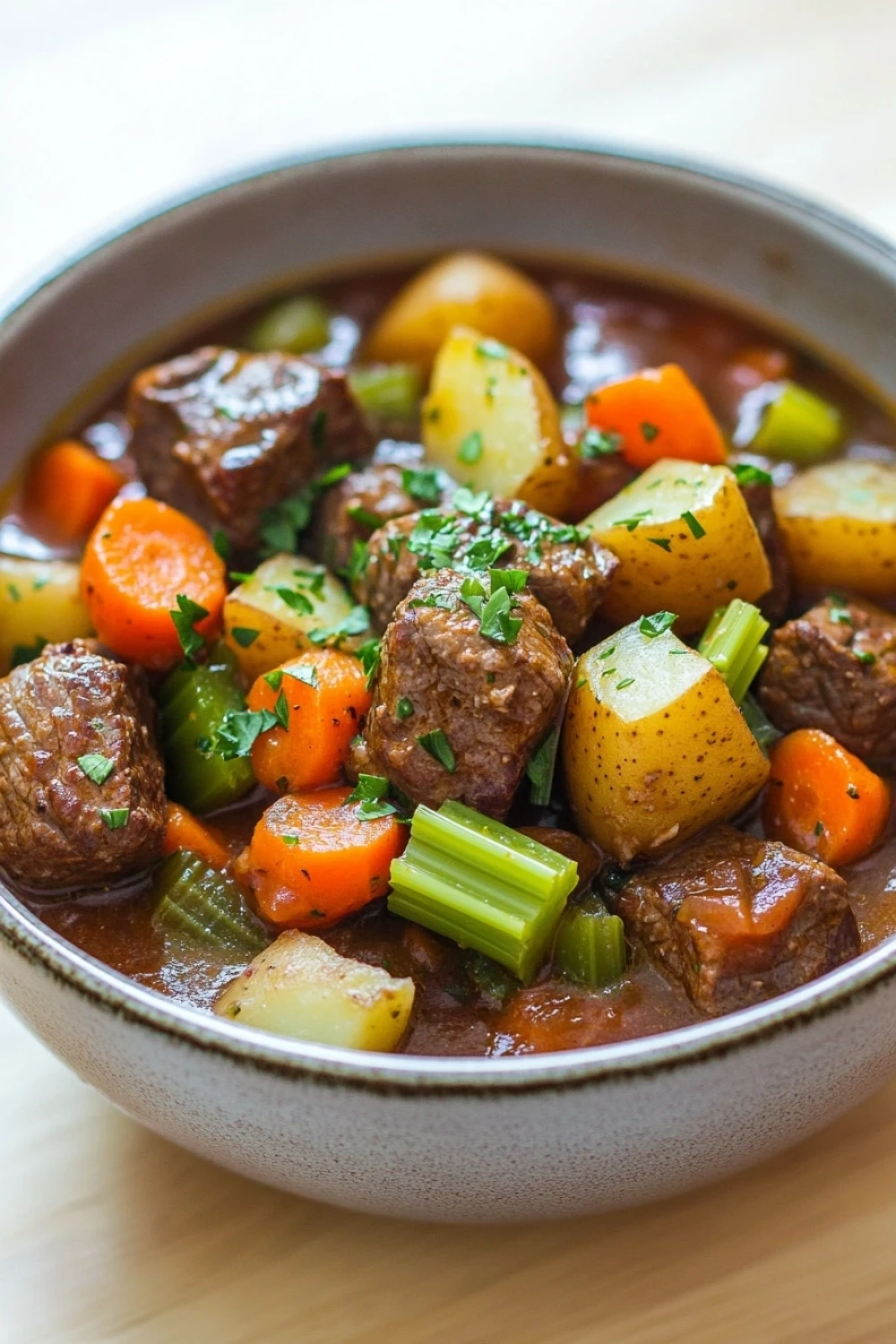
Cold weather calls for serious stew.
There’s something about the slow-simmered chunks of beef stew meat that hits the spot when the chill sets in. I remember the first time I browned that beef—each sear locking in juices, creating a crust that promised deep, robust flavor. It’s not just any stew; this is a protein powerhouse, designed to fuel your evening with every tender bite.
The kitchen fills with the aroma of garlic and herbs dancing together, coaxing a savory richness from the pot. As the broth bubbles gently, I can almost hear it whispering, “patience, mate—good things come to those who wait.” The mix of carrots, celery, and potatoes adds an earthy backbone that keeps this stew grounded and satisfying.
One pot. Hours of simmering. And a dinner that’s worth every second.
For a delicious way to use high protein beef stew meat, check out our Zesty Ground Beef Zucchini Casserole for Hearty Dinner Nights.
Real Life Benefits of Making High Protein Beef Stew Meat
- Muscle fuel for days—this beef stew packs a serious protein punch that keeps you powered through tough workouts or long shifts.
- One-pot wonder—minimal cleanup after a big, meaty meal means more time chilling and less scrubbing.
- Slow-simmered magic—letting the beef stew low and slow breaks down collagen, making each bite melt-in-your-mouth tender.
- Veggie bonus—carrots, celery, and potatoes soak up that rich broth, adding fiber and nutrients without complicated steps.
- Batch-it and stash-it—make a big pot, freeze leftovers, and have a no-brainer dinner ready for those hectic weeknights.
High Protein Beef Stew Meat
- Total Time: 2 hours 50 minutes
- Yield: 6 1x
Description
A hearty and protein-packed beef stew featuring tender chunks of beef simmered with vegetables in a rich, flavorful broth. Perfect for a nutritious and satisfying meal.
Ingredients
2 pounds beef stew meat, cut into 1-inch cubes
2 tablespoons olive oil
1 large onion, diced
3 cloves garlic, minced
4 cups low-sodium beef broth
2 cups water
3 large carrots, peeled and sliced into 1/2-inch pieces
3 celery stalks, sliced into 1/2-inch pieces
3 medium potatoes, peeled and cut into 1-inch cubes
2 teaspoons tomato paste
1 teaspoon dried thyme
1 teaspoon dried rosemary
2 bay leaves
Salt, to taste
Black pepper, to taste
2 tablespoons all-purpose flour
2 tablespoons cold water
2 tablespoons chopped fresh parsley (for garnish)
Instructions
Pat the beef stew meat dry with paper towels and season with salt and black pepper.
Heat olive oil in a large heavy-bottomed pot or Dutch oven over medium-high heat.
Add the beef stew meat in batches, avoiding overcrowding, and brown on all sides, about 4-5 minutes per batch. Remove browned beef and set aside.
In the same pot, add the diced onion and cook until softened, about 5 minutes.
Add the minced garlic and cook for 1 minute until fragrant.
Stir in the tomato paste, dried thyme, and dried rosemary, cooking for 1 minute to release flavors.
Return the browned beef to the pot and pour in the beef broth and water.
Add the bay leaves and bring the mixture to a boil.
Reduce heat to low, cover, and simmer for 1 hour 45 minutes, stirring occasionally.
After 1 hour 45 minutes, add the carrots, celery, and potatoes to the pot.
Cover and continue to simmer for another 45 minutes, or until the vegetables and beef are tender.
In a small bowl, whisk together the all-purpose flour and cold water to create a slurry.
Stir the slurry into the stew and cook uncovered for 5-10 minutes to thicken the broth.
Remove bay leaves, adjust seasoning with salt and black pepper to taste.
Garnish with chopped fresh parsley before serving.
- Prep Time: 20 minutes
- Cook Time: 2 hours 30 minutes
Explore more:
Dinner Recipes
High Protein Beef Stew Meat: Mastering the Hearty Classic
The Art of Subbing Without Losing Soul
Ever found yourself staring at your pantry, missing a key stew ingredient? Happens to the best of us. Luckily, swapping ingredients here isn’t a dealbreaker if you know the ropes. For instance, if you’re out of beef broth, beef bouillon cubes or even a strong chicken broth can slide in without causing a mutiny in your pot. Just dilute the bouillon in water carefully — nobody wants a salt tsunami. Veggies? Don’t sweat it. Celery’s crunch can be swapped for fennel or even parsnip if you’re feeling adventurous—adding a subtle anise twist that some swear by. And potatoes? Sweet potatoes or rutabaga bring a different vibe, lending a bit of sweetness or earthiness while still soaking up the stew’s meaty goodness. But here’s the kicker: when you change these, your stew’s personality morphs. So think of swaps as remixing a classic track — familiar yet fresh, but don’t throw in pineapple unless you want a total plot twist.
Why That Slow Simmer Is Non-Negotiable
Slow and low. It’s the mantra that separates a blah stew from one that sticks to your ribs. The beef stew meat here isn’t just hung out to dry; it’s coaxed into tenderness by hours of gentle heat. Quick cooking? Forget it. You’ll get rubbery chunks that fight you at every bite. The low simmer breaks down collagen and connective tissue—turning what could be tough leather into fork-tender bliss. But here’s a heads-up—don’t rush this: cranking the heat to speed it up just squeezes moisture out and toughens the meat. Patience pays off. Also, don’t skip the browning step. That crusty sear? It’s flavor gold, creating those complex Maillard reaction notes that make the broth sing. If your stew smells boring at this stage, you’re doing it wrong. I remember one winter where I skipped browning because I was in a rush; the stew was lifeless, just a sad, watery mess. Lesson learned—never shortchange the sear.
Fixing the Usual Snafus: When Your Stew Goes Sideways
Too thin? No worries. This stew has you covered with a classic flour slurry trick—two tablespoons flour whisked into cold water, stirred in and cooked until thickened. Easy fix. But watch that timing: toss it in too early, and you risk gummy gravy. Too late, and your broth is forever weak. Salt issues? Remember beef broth often hides salt, so season lightly in the beginning and adjust at the end. Oversalted stew is a nightmare, but can be tamed by adding a peeled, raw potato piece—drawing out excess salt like a sponge (old chef’s trick, trust me). Mushy veggies? Happens if you add ‘em too soon; carrots and potatoes have different cooks times, so add them after the long beef simmer. And if your beef is chewy? Likely undercooked or not browned well. Don’t rush it—slow and steady wins this stew race every time.
High Protein Beef Stew Meat: FAQs
- Is this stew good for meal prep?
- Absolutely! This stew holds up well in the fridge and freezer. Make a big batch on Sunday, and you’re set for several hearty meals during the week. Just remember to cool it completely before storing.
- Can I use other cuts of beef?
- You can, but it’s a bit of a gamble. Stew meat works best because it becomes tender over long, slow cooking. Using a leaner cut might leave you chewing rubber after hours.
- Do I have to brown the beef first?
- Yes, browning is key. It adds layers of flavor—what the pros call the Maillard reaction—giving your stew that deep, rich taste that’s impossible to fake.
- What’s the deal with the flour and water slurry?
- That slurry is your secret weapon for thickening without lumps. Toss it in near the end, stir well, then let it simmer uncovered. Your broth goes from watery to cozy, clinging to every spoonful.
- Can I make this stew in a slow cooker?
- Yes, but adjust timing. Brown the beef first for flavor, then cook on low for about 7-8 hours. Throw veggies in midway so they don’t turn to mush.