
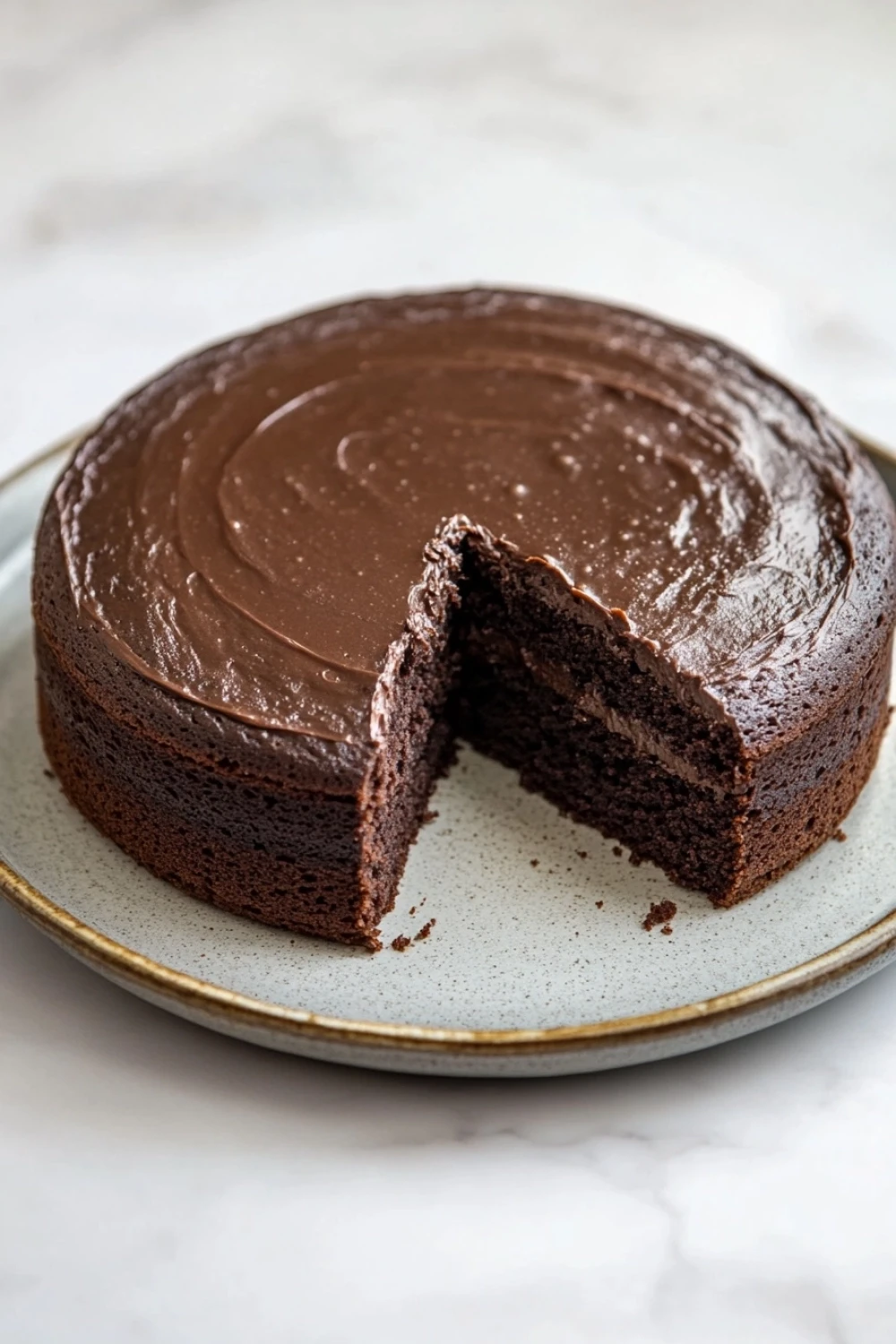
Chocolate craving? Meet your new obsession.
There’s something truly nostalgic about an old fashioned chocolate cake. It’s a no-frills, from-scratch kind of recipe—no shortcuts, just pure cocoa magic. I remember my grandmother’s kitchen, the air thick with the scent of cocoa and vanilla, the clatter of mixing bowls, and a sense that something special was about to happen. That tender crumb and rich chocolate flavor? It’s the kind of cake that doesn’t mess around.
The trick lies in the batter’s texture—thin and almost fragile before baking, thanks to boiling water folding into the mix. That’s the secret handshake, folks. It might look like a shambles, but it’s the ticket to a moist, tender crumb that holds up bite after bite. No dense bricks here—just an easy-going crumb with old-school charm.
Get ready to roll up your sleeves and dive into a slice of childhood, where chocolate cake ruled the roost and every bite was a comforting hug.
If you’re a fan of classic desserts, you might also enjoy our guide to Essential Carrot Cake Ingredients for a Moist Classic Treat as a perfect complement to your chocolate cake old fashioned cravings.
Real Life Perks of Baking This Old Fashioned Chocolate Cake
- Cranks out a moist, tender crumb every single time—no dry cake disasters here.
- Whips up quickly: just under an hour from start to finish—perfect for last-minute cravings or unexpected guests.
- The classic cocoa punch satisfies chocoholics without fuss—no fancy ingredients, just solid basics.
- Freezer-friendly: bake ahead, stash, and pull out when you need a no-brainer dessert win.
- Hands-on but forgiving. Even if you’re a rookie, the batter’s forgiving enough to keep the cake from tanking.
Old Fashioned Chocolate Cake
- Total Time: 55 minutes
- Yield: 8 1x
Description
A rich and moist old fashioned chocolate cake made from scratch, featuring a classic cocoa flavor and a tender crumb. Perfect for any celebration or a comforting dessert.
Ingredients
1 and 3/4 cups (220 grams) all-purpose flour
2 cups (400 grams) granulated sugar
3/4 cup (65 grams) unsweetened cocoa powder
1 and 1/2 teaspoons baking powder
1 and 1/2 teaspoons baking soda
1 teaspoon salt
2 large eggs, at room temperature
1 cup (240 ml) whole milk, at room temperature
1/2 cup (120 ml) vegetable oil
2 teaspoons pure vanilla extract
1 cup (240 ml) boiling water
Instructions
Preheat your oven to 350°F (175°C). Grease and flour two 9-inch round cake pans or line them with parchment paper.
In a large mixing bowl, sift together the all-purpose flour, granulated sugar, unsweetened cocoa powder, baking powder, baking soda, and salt until well combined.
In a separate medium bowl, whisk together the eggs, whole milk, vegetable oil, and vanilla extract until smooth.
Pour the wet ingredients into the dry ingredients and mix with a hand mixer or whisk until just combined and smooth. Do not overmix.
Carefully add the boiling water to the batter and stir slowly until fully incorporated. The batter will be thin; this is normal.
Divide the batter evenly between the prepared cake pans.
Bake in the preheated oven for 30 to 35 minutes, or until a toothpick inserted into the center of the cakes comes out clean.
Remove the cakes from the oven and allow them to cool in the pans for 10 minutes.
Run a knife around the edges and invert the cakes onto wire racks to cool completely before frosting or serving.
- Prep Time: 20 minutes
- Cook Time: 35 minutes
Explore more:
Dessert Recipes
Mastering the Old Fashioned Chocolate Cake: Tricks, Tweaks, and Saves
The One Ingredient Swap That Won’t Steal Your Thunder
Look, not everyone has whole milk lounging in the fridge. No shame in that game. If you find yourself reaching for the substitute shelf, don’t sweat it — you can swap whole milk for buttermilk, and here’s why it’s a total game-changer. Buttermilk’s tangy punch reacts with baking soda, giving your cake a tender crumb and that gentle rise that whispers “classic.” Just keep the volume the same, but ease up a smidge on the baking powder since buttermilk brings its own acidic zip. Alternatively, coffee lovers, the boiling water in the recipe? Try swapping it with brewed coffee. Trust me, it doesn’t just make the batter look richer; it deepens the chocolate flavor without turning the cake into a caffeine bomb. These swaps keep the soul of the cake intact but push your flavor radar a few notches. Worth it, every time.
The Magic Behind That Thin Batter—No, It’s Not Broken
This cake batter is watery—like, “Did I mess up?” watery. But hold up. That’s exactly how it should be. The boiling water thins the batter to a pourable state, helping the cocoa powder bloom fully, which makes the chocolate notes pop loud and clear. Skipping or cooling the water messes with this delicate balance, resulting in a cake that’s dry or flat. So, resist the urge to toss it if it looks more like crepe batter than dough. When baking, the thin batter ensures a moist crumb—no desert-dry sponge here. Yes, it’s counterintuitive, but sometimes you gotta trust the strange feel of your batter to nail the texture and flavor. Remember: in baking, weird often equals wonderful.
When Things Go South: Rescue Missions for Common Chocolate Cake Fails
Ever pulled a cake out of the oven only to find it’s sunken in the middle? Ugh. That’s the classic “cake flop,” usually from opening the oven door too soon or underbaking. Here’s the fix: tent the cake with foil and pop it back in for 5-10 minutes to give it a fighting chance to finish cooking without burning the top. And if your crumb ends up dense or gummy? Could be overmixing—stop at “just combined” next time. Overworking the batter wakes up gluten and toughens the cake. Lastly, if you get a dry crumb, double-check your measuring game. Too much flour or too little fat kills moisture faster than a bad pun kills a party. I’ve learned this the hard way—and now, my cakes bounce back because I nerd out on these tiny details. You will too.
Old Fashioned Chocolate Cake FAQ
Absolutely! Just reduce the baking time to about 18-22 minutes and keep an eye on them. Cupcake tins usually heat faster than cake pans, so test with a toothpick to avoid drying out.
Yes and no. The boiling water blooms the cocoa powder, making the chocolate flavor pop like nobody’s business. It also thins the batter, giving that tender crumb. Skip it and you’ll end up with a denser cake missing that classic old-school vibe.
You can, but here’s the deal: oil keeps the cake moist longer because it stays liquid at room temp, unlike butter. If you use butter, melt it first and expect a slightly different texture—still tasty, just a bit more crumbly.
Yes. Store it wrapped at room temperature for two days tops. For longer, freeze it wrapped tightly to keep it fresh. I’ve done this with zero flavor loss—just thaw overnight in the fridge before frosting.
No, not without tweaking. The flour mix is key for structure here. You’d need a well-balanced gluten-free blend with xanthan gum to get close. For a straight swap, the cake might fall apart or turn crumbly.