
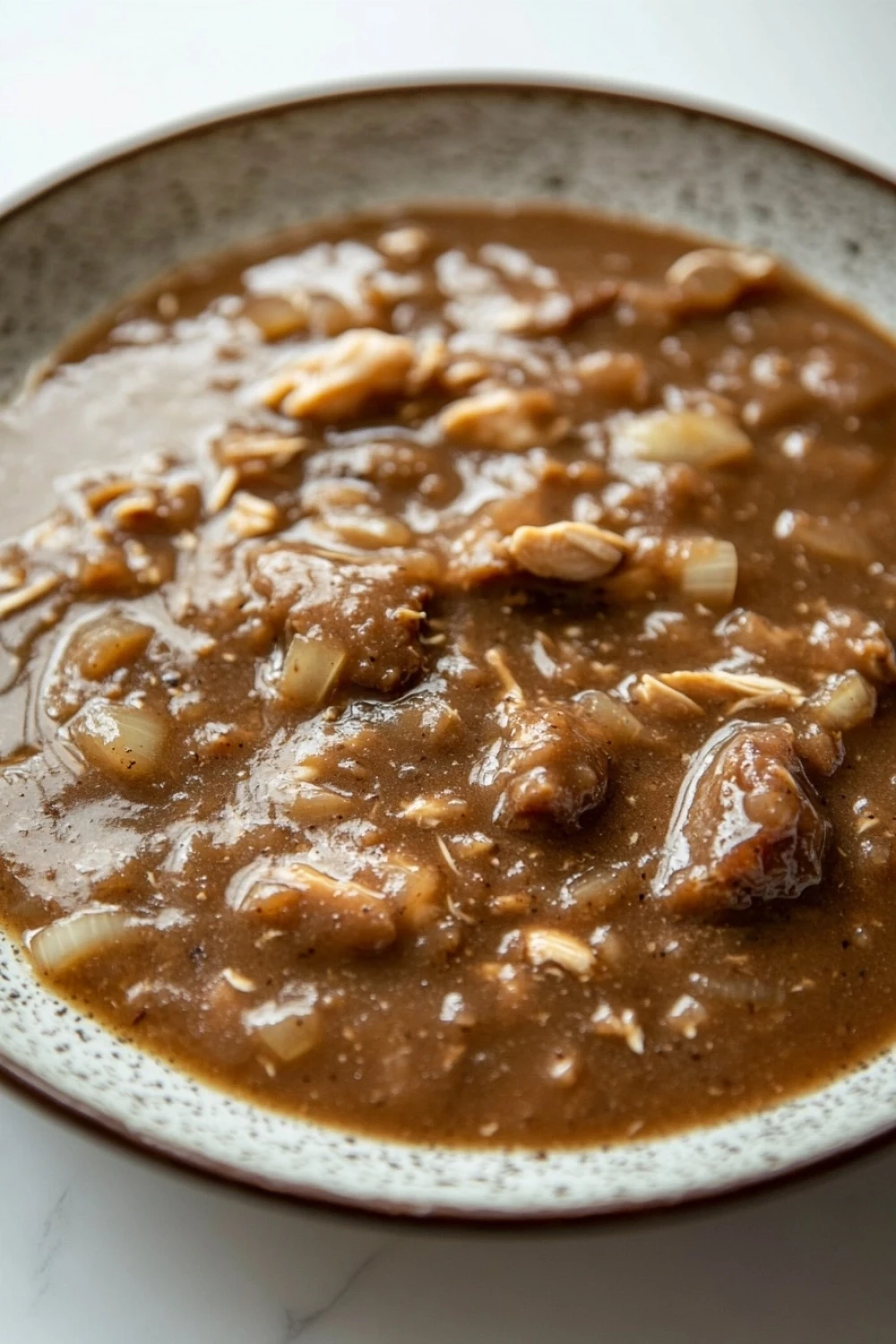
Slow down, folks.
There’s something about gravy on the table that changes the whole vibe of a meal. Not just any gravy—this one marries beef’s depth with chicken’s subtle warmth, creating a sauce that’s downright addictive. I remember the first time I whipped this up, thinking it’d be a quick side note. Nope. It stole the spotlight, like a secret weapon hiding in plain sight.
The magic starts with butter and flour sizzling into a roux, golden and nutty, whispering promises of comfort. Then, the broths—beef’s robust backbone and chicken’s gentle hum—join forces. Toss in a pinch of onion and garlic powders, a dash of Worcestershire, and you’re cooking with gas. This gravy isn’t just a pour-over; it’s the kind of sauce that makes mashed potatoes beg for more and veggies stand taller on the plate.
Trust me: once you’ve tasted this, you’ll want it on everything. No more dry dinners. Just that luscious, velvety river of flavor flowing where it belongs.
For a delicious twist on classic flavors, check out our Slow Cooker Lamb Chop Stew: Tender, Hearty Comfort in One Pot recipe that pairs beautifully with beef chicken gravy.
Real-Life Perks of Beef and Chicken Gravy
- Transforms plain mashed potatoes into a plate-smashing side that your family will fight over.
- The combo of beef and chicken broth hits that sweet spot between hearty and light—no cloying heaviness here.
- Whips up in just 30 minutes, perfect for last-minute dinner saves when you’re running on empty.
- Gives roasted veggies and meats a juicy, savory punch—no need for extra seasoning chaos.
- Leftovers keep well in the fridge and reheat without losing that homemade charm—no one will guess you didn’t spend hours slaving away.

Beef and Chicken Gravy
- Total Time: 30 minutes
- Yield: 6 1x
Description
A rich and savory beef and chicken gravy perfect for enhancing mashed potatoes, roasted vegetables, or your favorite meat dishes. This gravy combines the deep flavors of beef broth with the lighter notes of chicken broth for a balanced and delicious sauce.
Ingredients
2 tablespoons unsalted butter
2 tablespoons all-purpose flour
1 cup beef broth
1 cup chicken broth
1/2 teaspoon onion powder
1/2 teaspoon garlic powder
1/4 teaspoon black pepper
1/4 teaspoon salt
1 teaspoon Worcestershire sauce
Instructions
In a medium saucepan, melt the unsalted butter over medium heat.
Once the butter is melted and bubbling, whisk in the all-purpose flour to form a smooth roux.
Cook the roux, whisking constantly, for about 2-3 minutes until it turns a light golden brown color.
Gradually whisk in the beef broth and chicken broth, ensuring no lumps form.
Add the onion powder, garlic powder, black pepper, salt, and Worcestershire sauce to the saucepan.
Bring the mixture to a gentle simmer, whisking frequently to prevent sticking.
Continue to simmer for about 10-15 minutes until the gravy thickens to your desired consistency.
Taste and adjust seasoning if needed.
Remove from heat and serve warm over your favorite dishes.
- Prep Time: 10 minutes
- Cook Time: 20 minutes
Explore more:
Dinner Recipes
Mastering Beef and Chicken Gravy: Tips, Tricks & Fixes
The Roux: Your Gravy’s Backbone—Handle It Like a Pro
Ever started a gravy only to end up with gritty lumps or a dull paste? That roux (butter + flour) isn’t just there to thicken—it’s the foundation of flavor and texture. Melt your butter gently—no scorching allowed—and whisk in the flour like you’re coaxing a stubborn friend into a secret handshake. The key? Keep that whisk moving, constantly, for 2-3 minutes until you see a light golden hue emerge. This little dance toasty-fies the flour, knocking out the raw flour edge and building a nutty base. Miss this step, and you’re stuck with a pasty mess or a bland sauce that tastes like flour water. Trust me, the roux is where the gravy gets its swagger.
Broth Battles: Why Mixing Beef and Chicken Broth Works Wonders
Some folks swear by one broth only—beef for depth, chicken for brightness. But here’s the kitchen hack I live by: blend the two. Beef broth brings the heavyweight punch—meaty, robust, a real heavyweight champ. Chicken broth’s lighter, fresher vibes cut through that intensity, preventing the gravy from feeling like an iron brick on your palate. It’s like yin and yang in sauce form. When you whisk them in gradually, you avoid the dreaded clumping or separation. Pro tip: Bring your broth to room temp before whisking it in, so your roux doesn’t seize up like a shy fish out of water. The result? A gravy with body but not a bulldozer in your mouth.
When Gravy Goes Rogue: Quick Fixes for Common Mishaps
Here’s the lowdown for when things go sideways:
- Lumpy mess? Strain it through a fine mesh or blitz briefly with an immersion blender. No shame in ninja moves.
- Too thin? Mix a teaspoon of flour or cornstarch with cold water, add it slow, whisking madly until thickened.
- Too thick? Splash in warm broth or even water—don’t drown it, just loosen it up.
- Bland flavor? Worcestershire sauce is your secret weapon here. If you forgot it, a dash of soy sauce or a pinch of beef bouillon can patch things up.
Gravy isn’t a set-it-and-forget-it deal. It demands attention—stir, taste, adjust. I remember one Thanksgiving when my gravy was rock solid. A quick splash of hot broth and a whisk saved the day, turning disaster into dinner table applause. Keep calm and gravy on.
Beef and Chicken Gravy FAQs
- Can I use this gravy for mashed potatoes?
- Absolutely—it’s a classic pairing. The rich blend of beef and chicken broth makes the potatoes sing.
- How thick should my gravy be?
- Think of gravy like Goldilocks: not too runny, not too stiff. A smooth, pourable texture that clings just right is the goal—adjust cooking time to tweak thickness.
- Can I make it gluten-free?
- No, not without swapping out the flour. Use a gluten-free flour blend or cornstarch slurry instead to keep it safe and tasty.
- Do I have to use both broths?
- Yes and no. Using both beef and chicken broths creates that balanced flavor punch—skip one if you must, but it won’t be the same beast.
- Will this gravy keep well?
- Yes. Store it airtight in the fridge for up to 3 days. When reheating, do it low and slow—add a splash of broth to loosen things up if it thickened overnight.