
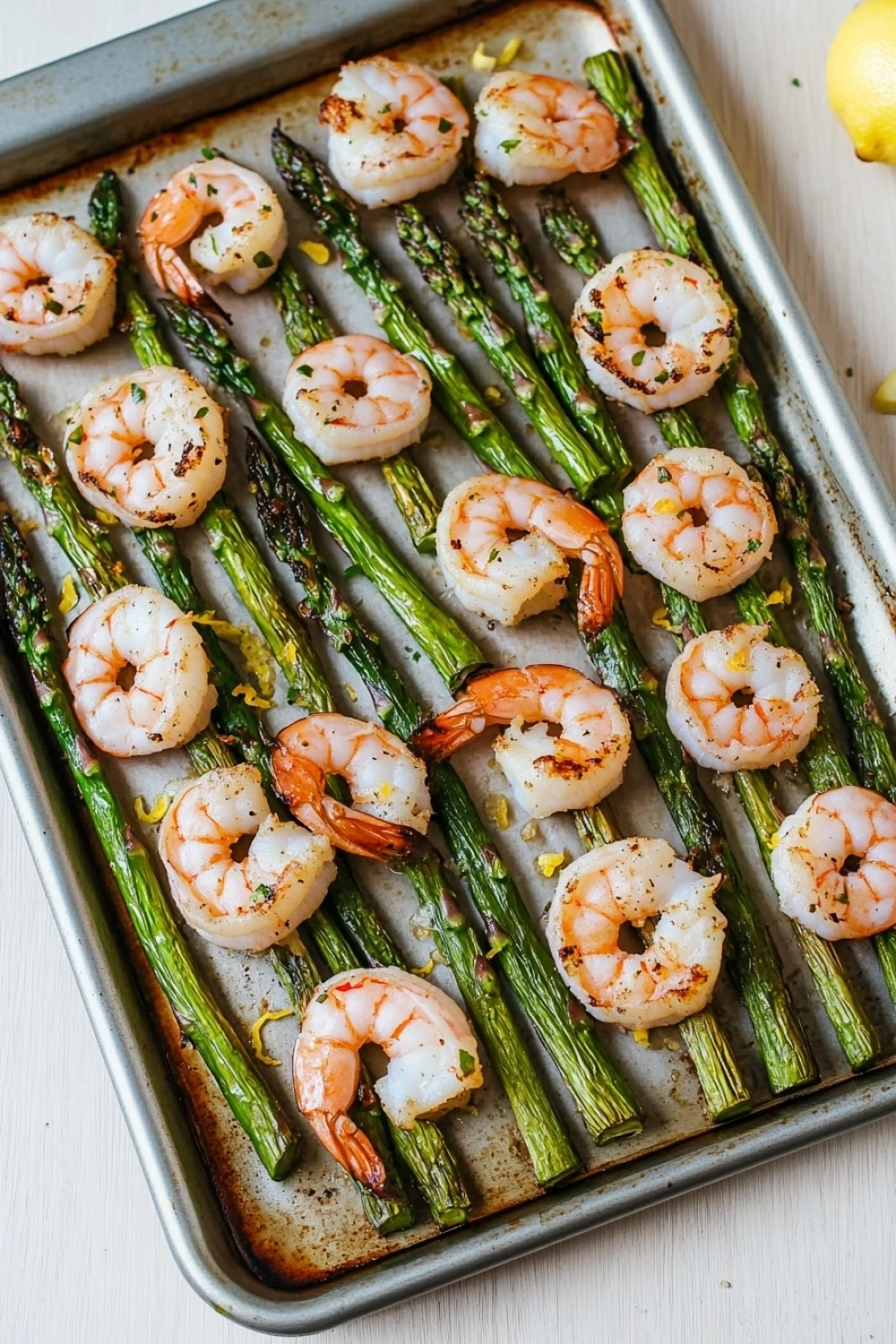
Simplify tonight’s dinner.
There’s something almost rebellious about tossing shrimp and asparagus together on a single sheet pan, slathering them in a garlicky, lemony marinade, then roasting until everything hits that perfect tender-crisp note. I remember the first time I tried this—no fuss, no muss, just a burst of bright flavors and that unmistakable roasted aroma filling the kitchen.
It’s a one-pan wonder that screams weeknight winner. No juggling pots or wrestling with complicated steps. Just fresh ingredients and a quick roast turning out seafood and veggies that sing in harmony. The smoked paprika adds a cheeky little twist, while the lemon juice cuts through with a zesty punch.
Ready in under 25 minutes? That’s my kind of fast-track to dinner glory.
If you love easy seafood dinners, you’ll enjoy our Sheet Pan Shrimp Fajitas with Pineapple: Quick Flavor-Packed Dinner as a perfect complement to your shrimp sheet pan with asparagus.
Real Life Benefits of Shrimp Sheet Pan with Asparagus
- Whips up in just over 20 minutes—perfect when you’re racing the clock on a hectic weeknight.
- One pan, zero fuss: minimal cleanup means more time to kick back after dinner.
- Lean protein and fresh veggies combine for a meal that fuels your body without weighing you down.
- Smoky paprika and zesty lemon give the dish punch without needing a dozen extra ingredients cluttering your pantry.
- Flexible enough to swap in whatever’s fresh at the market—never gets boring or stale.
Shrimp Sheet Pan with Asparagus
- Total Time: 22 minutes
- Yield: 4 1x
Description
A quick and easy shrimp sheet pan dinner featuring tender asparagus and flavorful shrimp roasted with garlic, lemon, and herbs. Perfect for a healthy weeknight meal.
Ingredients
1 pound large shrimp, peeled and deveined
1 pound fresh asparagus, trimmed and cut into 2-inch pieces
3 tablespoons olive oil
4 cloves garlic, minced
1 teaspoon smoked paprika
1/2 teaspoon salt
1/4 teaspoon black pepper
1 lemon, zested and juiced
1 tablespoon fresh parsley, chopped
Instructions
Preheat the oven to 400°F (200°C).
In a large bowl, combine the olive oil, minced garlic, smoked paprika, salt, black pepper, lemon zest, and lemon juice. Stir well to combine.
Add the shrimp and asparagus to the bowl. Toss gently to coat all pieces evenly with the seasoning mixture.
Spread the shrimp and asparagus in a single layer on a large rimmed baking sheet.
Roast in the preheated oven for 10 to 12 minutes, or until the shrimp are opaque and cooked through and the asparagus is tender-crisp.
Remove from the oven and sprinkle with chopped fresh parsley.
Serve immediately with lemon wedges if desired.
- Prep Time: 10 minutes
- Cook Time: 12 minutes
Explore more:
Dinner Recipes
Mastering the Shrimp Sheet Pan with Asparagus
The Quick Swap That Changes Everything
Ever found yourself halfway through roasting shrimp only to realize you’re out of fresh asparagus? No sweat. Green beans or broccolini jump into the mix seamlessly, bringing their own crunch and subtle sweetness. Want to stray further? Try thinly sliced zucchini or snap peas—they roast up juicy and tender, soaking up that garlicky, lemony mojo like champs. Olive oil stays king here, but if you’re feeling frisky, a splash of browned butter in the mix adds a nutty punch that’ll have you licking your fingers. The key is keeping everything in similar size chunks so they cook evenly—no one likes a mushy veggie hiding under a rubbery shrimp.
Why Roasting Shrimp and Asparagus Hits Different
Roasting at 400°F is like the sweet spot of shrimp cooking. It’s hot enough to caramelize the edges—hello, Maillard reaction—but gentle enough to keep shrimp tender, not rubbery. Throw in asparagus at the same time, and you get that perfect tender-crisp bite that snaps when you bite down. Tossing everything in lemon juice and smoked paprika before the oven? That’s the secret handshake—acid that brightens, spice that teases, fat that carries flavor like a boss.
But here’s a nugget: don’t crowd the pan. If you pile everything on top of each other, steam wins over roast, and you end up with limp asparagus and sad shrimp. Spread them out like you’re sunbathing on a baking sheet—let the heat do its magic.
Fixing the Common Sheet Pan Slip-Ups
Shrimp turned rubbery? It’s a classic rookie move—overcooking. Shrimp cook fast, and every second counts. Keep a hawk’s eye, start checking at 8 minutes. They’re done when they curl into a loose “C” and turn opaque. Anything tighter, and you’ve crossed into tough city.
Asparagus soggy? Two things: too little heat or overcooked. Crank that oven to at least 400°F, and don’t cook longer than 12 minutes. If your pan is crowded, asparagus steams rather than roasts; don’t be shy—use two pans if needed.
Flavor flat? Don’t skip the lemon zest and juice—acid is the unsung hero that wakes up the whole plate. Fresh parsley sprinkled on top at the end isn’t just for looks—it adds a fresh green punch that cuts through the garlicky richness.
Shrimp Sheet Pan with Asparagus FAQ
1. Can I use frozen shrimp for this recipe?
Yes, you can! Just thaw them completely and pat dry before tossing with the seasoning. Frozen shrimp tend to release extra water, so drying them well helps keep that sheet pan from steaming instead of roasting.
2. What’s the best way to trim asparagus?
Grab a stalk and bend it gently near the bottom—the woody part naturally snaps off where the tender section starts. No need to eyeball it. It’s the lazy chef’s hack for perfect asparagus every time.
3. Can I swap smoked paprika for regular paprika?
You can, but smoked paprika brings a subtle, cozy depth that regular paprika can’t match. If you’re out, regular paprika still works to add mild sweetness and color, just skip the smoky vibe.
4. How do I avoid overcooking shrimp?
Shrimp cook fast—blink and they’re rubber. Watch the clock and pull them from the oven as soon as they turn opaque and curl into a loose “C” shape. Tight curls mean overdone. Timing is everything here.
5. Is this meal good for meal prep?
Absolutely. It reheats well, keeps fresh in the fridge for a day or two, and stays tasty without much fuss. Just reheat gently—no microwave nuking madness. A quick skillet sizzle gets them ready to roll again.