
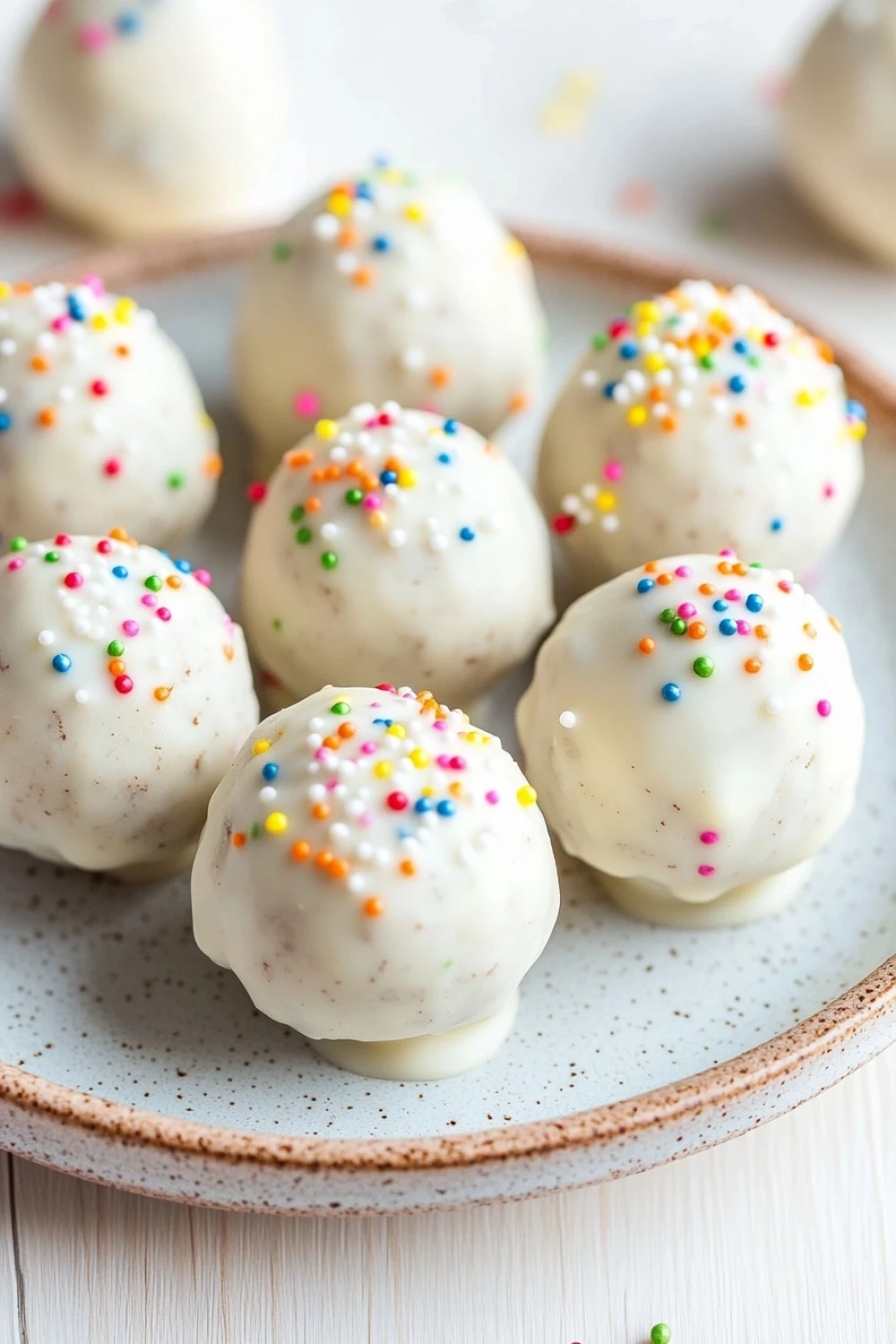
Sweet temptation incoming.
There’s something about the humble vanilla cake ball that sneaks up and steals the show. Picture this: a quiet kitchen bathed in soft afternoon light, the air thick with sugary warmth as a batch of these bite-sized wonders cool on the rack. I remember the first time I tried making them — a bit of a sticky mess at first, but the payoff was worth every crumb.
Mixing cake crumbs with frosting isn’t just baking; it’s playful alchemy. The trick? Getting the balance just right so the balls hold without losing that melt-in-your-mouth texture. When dipped in smooth white chocolate, they transform into little gems that sparkle with sprinkles or stand elegant on their own.
These vanilla cake balls aren’t just for fancy parties; they’re the kind of treat that makes any random Tuesday feel like a celebration. Ready to roll up your sleeves and dive into some serious sweet-making? Let’s get cracking and put these little bites of joy on your dessert radar.
If you love vanilla cake balls, you’ll definitely want to try our Almond Shortbread Cookie Recipe: Buttery, Nutty, Perfectly Crumbly for another delicious treat.
Why Vanilla Cake Balls Are Your Next Party MVP
- Perfect bite-sized treats—no forks, no mess, just pure hands-on fun.
- Made ahead and chilled—freeing you from last-minute kitchen chaos on event day.
- Customizable coating and sprinkles add a personal flair, turning simple sweets into show-stoppers.
- Great way to use leftover cake scraps—waste not, want not in the truest sense.
- Kid-friendly and crowd-pleasers alike; watch them vanish faster than you can say “sweet tooth.”
Vanilla Cake Balls
- Total Time: 50 minutes
- Yield: 24 cake balls 1x
Description
Delicious and bite-sized vanilla cake balls coated in smooth vanilla frosting and white chocolate, perfect for parties or a sweet treat.
Ingredients
1 cup all-purpose flour
3/4 cup granulated sugar
1/2 teaspoon baking powder
1/4 teaspoon baking soda
1/4 teaspoon salt
1/2 cup unsalted butter, softened
2 large eggs
1/2 cup whole milk
1 teaspoon pure vanilla extract
3/4 cup vanilla frosting
12 ounces white chocolate candy melts
Sprinkles for decoration (optional)
Instructions
Preheat the oven to 350°F (175°C).
Grease and flour an 8-inch round cake pan.
In a medium bowl, whisk together the flour, baking powder, baking soda, and salt.
In a large bowl, beat the softened butter and granulated sugar together until light and fluffy, about 3 minutes.
Add the eggs one at a time, beating well after each addition.
Mix in the vanilla extract.
Alternately add the dry ingredients and the milk to the butter mixture, beginning and ending with the dry ingredients. Mix until just combined.
Pour the batter into the prepared cake pan and smooth the top.
Bake for 28 to 30 minutes, or until a toothpick inserted into the center comes out clean.
Allow the cake to cool completely in the pan on a wire rack.
Once cooled, crumble the cake into a large bowl using your hands or a fork until fine crumbs form.
Add the vanilla frosting to the cake crumbs and mix thoroughly until the mixture holds together when pressed.
Roll the mixture into 1-inch balls and place them on a baking sheet lined with parchment paper.
Refrigerate the cake balls for at least 1 hour to firm up.
Melt the white chocolate candy melts in a microwave-safe bowl in 30-second intervals, stirring between each, until smooth.
Dip each chilled cake ball into the melted white chocolate, using a fork to fully coat it, then place back onto the parchment paper.
If desired, decorate with sprinkles before the coating sets.
Allow the cake balls to set completely at room temperature or in the refrigerator before serving.
- Prep Time: 20 minutes
- Cook Time: 30 minutes
Explore more:
Dessert Recipes
Nailing Vanilla Cake Balls: Smart Swaps, Science & Fixes
The Butter-to-Butterfly Effect: Why Your Cake Texture Matters
Ever wondered why your vanilla cake sometimes comes out dense or dry? The secret lies in the butter and sugar creaming step—a dance as old as baking itself. When you beat softened butter with sugar until fluffy, you’re actually trapping tiny air bubbles—little pockets that puff up during baking. Skip this or rush it, and you’re left with a sad, heavy cake that won’t crumble well for those cake balls. Whole milk also plays a tag-team role here, adding moisture and tenderness. Using low-fat milk or skipping the milk altogether? That’s a recipe for a crumbly, dry wreck. Stick to whole milk—no skimping. The texture you get directly impacts how your cake balls hold together once you mix in that frosting. It’s like building a house; the cake is your foundation, and the frosting is the mortar.
Ingredient Swaps That Won’t Make You Regret It
Butter acting up? You can swap it for an equal amount of mayonnaise in a pinch—yes, mayo! It keeps things moist thanks to its oil and egg content. Pro tip: don’t go rogue with margarine; it messes with flavor and structure. For the vanilla extract, if you only have imitation on hand, double the quantity—vanilla’s the MVP here. Craving a twist? Try almond extract but dial it down to half a teaspoon. When it comes to frosting, homemade or store-bought both work, but avoid anything too runny—it’ll turn your cake ball mixture into mush. And white chocolate candy melts? If you don’t have them, use good-quality white chocolate bars chopped and melted slowly over a double boiler to avoid seizing. Remember, patience pays off when melting chocolate—no nuking for endless cycles, or you’ll get a gritty mess. Take your time and stir between brief heat bursts.
The Dip-and-Drip Dance: Fixing Coating Fails Without Freaking Out
Chocolate coating can be the wild card. If your candy melts seize or get grainy, don’t toss them. A smidge of vegetable oil or shortening—about a teaspoon per 12 ounces of melts—can smooth things out. But add sparingly; too much oil makes the coating runny and won’t set properly. Struggling with thick coats that crack? Your chocolate was probably too cool or too thick when dipping. Warm it slightly and thin with a few drops of oil to get that slick, even coat. And if cake balls break apart during dipping? Chill them longer—even a quick 10-minute ice bath can toughen them up for the dunk. Finally, sprinkles are a sprinkle of personality, but don’t overload them or they’ll weigh your cake balls down and cause the coating to crack. Trust me, I’ve been there—less is more when it comes to that final flair.
Vanilla Cake Balls FAQ
A: Absolutely! You can prepare them a day or two in advance and keep them refrigerated. Just make sure they are in an airtight container to keep them from drying out or absorbing fridge smells.
A: No sweat. You can use good-quality white chocolate bars instead—just chop them finely and melt gently using the same interval technique. Avoid overheating or the chocolate might seize up.
A: Nope, not as-is. The recipe calls for all-purpose flour, which contains gluten. You’d need a gluten-free flour blend to switch it up.
A: Yes, freezing is a legit option here. Just put them in an airtight container and they’ll keep up to a month. Defrost in the fridge before munching.
A: The secret sauce is that frosting—they’re the glue holding those crumbly bits together. If your mixture feels crumbly, add a touch more frosting until it sticks like a charm.