
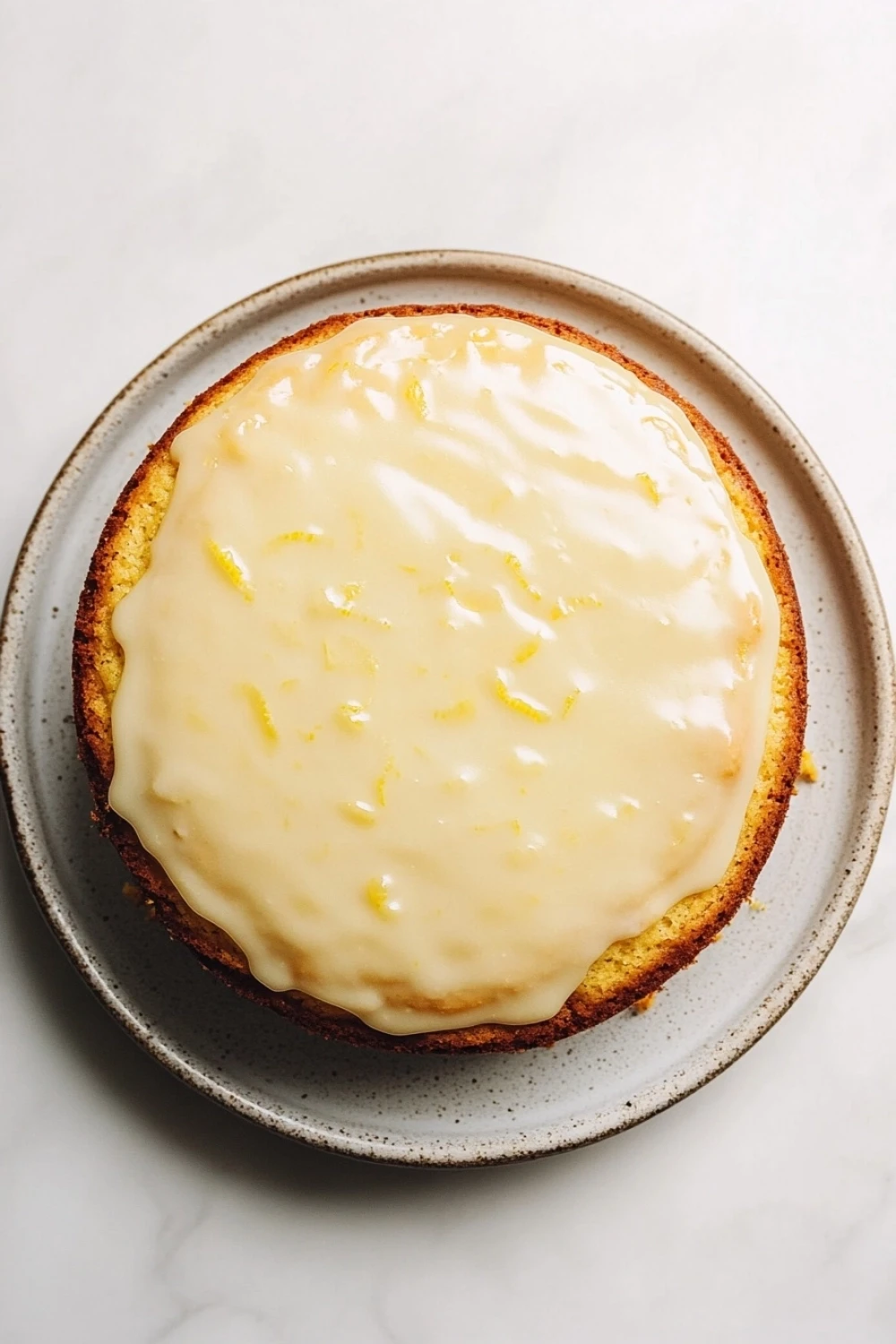
Nothing hits quite like lemon.
In my kitchen, the air fills with that sharp citrus scent—instantly waking up the senses. It’s not just any lemon cake; this is vintage lemon cake, the kind grandma might’ve whipped up on a Sunday afternoon with a chipped mixing bowl and stories to spare. The batter sings with fresh lemon zest and juice, mixed with butter and sugar until it’s just right—not too dense, not too airy.
What really sets this cake apart is the lemon syrup glaze. After baking, I poke tiny pinholes in the warm cake, then drizzle that syrup slowly, letting it seep deep inside. It’s like the cake catches a second wind—a juicy little secret that keeps each bite moist and flavorful long after the oven cools.
Simple. Nostalgic. Honest.
If you’re a fan of classic desserts, you might also enjoy our Banana Cake Sticker: Moist, Creamy, and Oh-So-Easy to Make for a delightful twist.
Real-Life Perks of Baking Vintage Lemon Cake
- Quick prep and bake—ready in about an hour, perfect for last-minute guests or a spontaneous tea party.
- Bright lemon zing cuts through sweetness, no need for heavy frosting—just that slick lemon glaze doing all the talking.
- Moist crumb thanks to the lemon syrup soak—this cake isn’t just cake; it’s a juicy, tangy slice of nostalgia.
- Simple pantry staples—no exotic ingredients that send you on a wild grocery chase. Classic stuff, easy wins.
- Versatile—works for casual afternoon hangouts or dressing up for a fancy shindig with zero fuss.

Vintage Lemon Cake
- Total Time: 1 hour
- Yield: 8 1x
Description
A classic vintage lemon cake with a tender crumb and bright lemon flavor, perfect for afternoon tea or any special occasion. This cake features a simple lemon syrup glaze that soaks into the layers, making it moist and flavorful.
Ingredients
1 1/2 cups (180 grams) all-purpose flour
1 1/2 teaspoons baking powder
1/4 teaspoon salt
1/2 cup (115 grams) unsalted butter, softened
1 cup (200 grams) granulated sugar
2 large eggs
1 teaspoon pure vanilla extract
1/2 cup (120 ml) whole milk
Zest of 2 lemons
1/4 cup (60 ml) fresh lemon juice
1/2 cup (100 grams) granulated sugar for lemon syrup
1 cup (120 grams) powdered sugar
2 tablespoons fresh lemon juice for glaze
1 teaspoon unsalted butter for glaze
Instructions
Preheat the oven to 350°F (175°C). Grease and flour an 8-inch (20 cm) round cake pan.
In a medium bowl, whisk together the all-purpose flour, baking powder, and salt. Set aside.
In a large bowl, beat the softened butter and 1 cup granulated sugar together with an electric mixer on medium speed until light and fluffy, about 3-4 minutes.
Add the eggs one at a time, beating well after each addition. Mix in the vanilla extract and lemon zest.
With the mixer on low speed, alternately add the flour mixture and the milk in three additions, beginning and ending with the flour mixture. Mix just until combined; do not overmix.
Pour the batter into the prepared cake pan and smooth the top with a spatula.
Bake for 35-40 minutes, or until a toothpick inserted into the center comes out clean.
While the cake is baking, prepare the lemon syrup by combining 1/4 cup fresh lemon juice and 1/2 cup granulated sugar in a small saucepan over medium heat. Stir until the sugar dissolves completely and the syrup is clear. Remove from heat and set aside.
When the cake is done, remove it from the oven and let it cool in the pan for 10 minutes. Then, poke holes all over the top of the cake using a skewer or fork.
Slowly pour the warm lemon syrup evenly over the cake, allowing it to soak in. Let the cake cool completely in the pan on a wire rack.
Once cooled, prepare the lemon glaze by whisking together the powdered sugar, 2 tablespoons fresh lemon juice, and 1 teaspoon melted unsalted butter until smooth.
Remove the cake from the pan and place it on a serving plate. Drizzle the lemon glaze evenly over the top of the cake.
Allow the glaze to set before slicing and serving.
- Prep Time: 20 minutes
- Cook Time: 40 minutes
Explore more:
Dessert Recipes
Mastering Vintage Lemon Cake: Tips, Tricks, and Fixes
The MVPs of Your Pantry: Ingredient Swaps That Work
Let’s talk flour first — the backbone of your cake. While all-purpose flour is the go-to here, don’t be shy about swapping in cake flour if you want a softer crumb that practically melts on your tongue. Cake flour has less protein, so your tender lemon cake turns out less dense and more cloud-like. Milk? Whole milk is in the recipe for richness, but if you’re feeling adventurous or dairy-averse, try buttermilk or a plant-based milk like oat milk. Buttermilk adds a subtle tang that plays well with lemon, while oat milk won’t steal any attention from that citrus punch. Butter, the unsung hero, can be swapped for salted butter if you adjust your salt accordingly — but unsalted keeps you in control. And eggs? No shortcuts here. Eggs are the glue and lift; ditching them can turn your cake into a sad, dry mess.
Why That Lemon Syrup Is the Real Game-Changer
The lemon syrup isn’t just sugar water—it’s the soul of moisture in this cake. Here’s the skinny: baking a cake is half battle, but keeping it moist? That’s the real prize. After baking, when your cake’s cooled slightly, you poke holes all over with a skewer—think of it as aerating the sponge, giving the syrup a highway straight into the crumb. Pour the warm syrup slowly so it seeps in without drowning your cake. It’s a subtle dance—too fast and you get a soggy bottom; too slow and the syrup sits on top, like a sad lemon puddle. The syrup’s sugar balances the tart lemon juice, creating that perfect sweet-tang tango in every bite. Trust me, skipping this step is like making a cake and forgetting the frosting—it just ain’t right.
When Life Gives You a Cake That’s Too Dense or Dry—Fixes to the Rescue
Here’s a confession: I’ve wrecked lemon cakes by overmixing the batter—guilty as charged. When you mix too much after adding flour, gluten goes into overdrive, and bam! Your cake turns into a rock-hard, dense disappointment. To fix this, always, always mix just until the flour disappears. Use a spatula for the final folds instead of the mixer—less is more. Now, if the cake is dry? Don’t toss it. Try brushing on extra lemon syrup after it cools—it’s the moisture CPR your cake needs. Or, serving it with a dollop of whipped cream or thick yogurt can balance dryness with creaminess. If your glaze is too runny, add more powdered sugar a teaspoon at a time until it thickens to spreadable consistency—runny glaze means a sloppy top and zero style points. Baking’s a wild ride, but each hiccup teaches you the ropes.
FAQs about Vintage Lemon Cake
- Can I use lemon extract instead of fresh lemon?
- Yes, you can! Lemon extract amps up the lemony vibe, but fresh lemon juice and zest bring that natural zing and brightness you just can’t fake. If you use extract, dial back the juice a bit to keep the balance.
- How do I make sure my cake stays super moist?
- Here’s the lowdown: that lemon syrup soak is the secret sauce. Poke holes right after baking, pour the warm syrup slowly to let it sink in fully—this keeps the crumb tender and avoids the dreaded dry cake syndrome. Also, don’t overbake; keep an eye on your toothpick test!
- Can I freeze this lemon cake?
- Absolutely! Wrap it tight in plastic wrap and then foil. Freeze for up to 2 months. Thaw overnight in the fridge, then bring to room temp before serving to get that perfect texture back.
- Any tricks for a smooth lemon glaze?
- Easy: sift your powdered sugar first. It perks up the glaze and keeps it lump-free. Whisk lemon juice and melted butter in gradually for that silky finish. Too runny? Add more powdered sugar. Too thick? A splash more lemon juice.
- Is this recipe gluten-free friendly?
- No. The recipe calls for all-purpose flour, so it’s not gluten-free as is. But if you wanna go gluten-free, swap in a 1:1 gluten-free baking flour blend and add a bit of xanthan gum to mimic the structure. Expect slight texture shifts.