
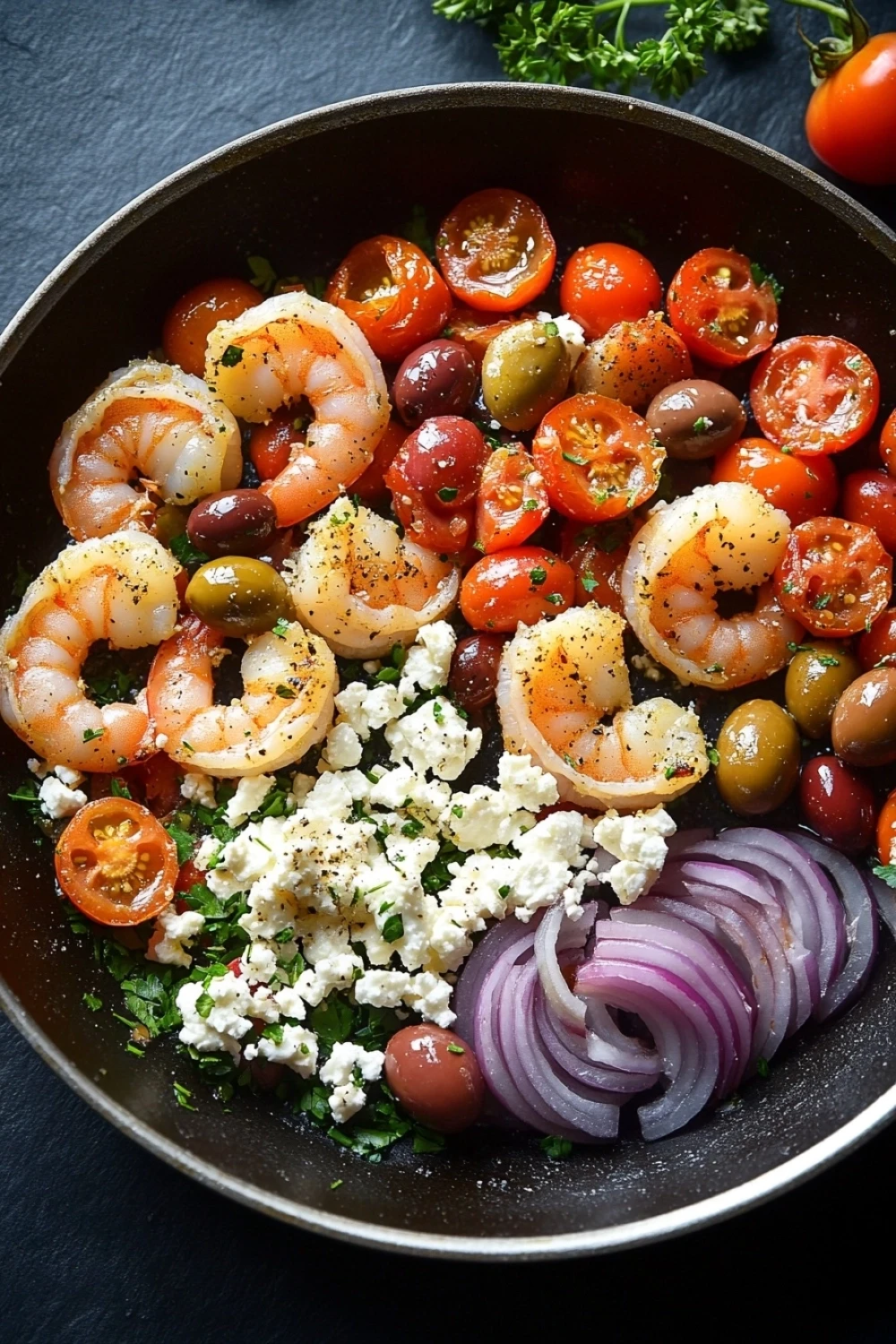
A burst of Greece in your skillet.
There’s something about the sizzle of shrimp hitting hot olive oil that instantly perks up the kitchen vibe. I remember the first time I tossed fresh cherry tomatoes and Kalamata olives alongside those plump little crustaceans—it was like catching a seaside breeze without leaving my stovetop. This dish? It’s a no-fuss, one-pan wonder that pulls classic Mediterranean flavors into a cozy, homey meal.
Tangy feta crumbles melt just enough atop the shrimp, mingling with oregano and a kick of crushed red pepper flakes—each bite a playful tug-of-war between creamy and spicy. I love how the lemon juice added at the very end wakes up the whole skillet, giving it that bright pop that keeps you spooning for more.
Perfect for dinner, especially when you want to ditch the heavy lifting but still score big on flavor and flair. Trust me, this dish will have you scraping the pan clean and planning your next Greek-inspired kitchen escapade.
For a delicious dinner idea, check out this greek shrimp and feta skillet that’s perfect for a cozy night in.
Real Life Benefits of Greek Shrimp and Feta Skillet
- Ready in under 30 minutes — perfect for those hectic weeknights when you want something tasty but zero fuss.
- The one-pan setup means fewer dishes, so you can spend less time scrubbing and more time chilling.
- Packed with protein and healthy fats from shrimp and olives, it’ll keep you full without feeling heavy.
- The fresh lemon juice brightens up the whole dish, making it feel like a mini Mediterranean vacay right at your dinner table.
- Leftovers reheat great, so you can double down for lunches and avoid the dreaded “what’s for lunch?” scramble.
Greek Shrimp and Feta Skillet
- Total Time: 25 minutes
- Yield: 4 1x
Description
A flavorful and easy one-pan dish featuring succulent shrimp cooked with tomatoes, olives, and feta cheese, infused with classic Greek flavors.
Ingredients
1 tablespoon olive oil
1 medium red onion, thinly sliced
3 garlic cloves, minced
1 pint cherry tomatoes, halved
1/2 cup Kalamata olives, pitted and halved
1 teaspoon dried oregano
1/2 teaspoon crushed red pepper flakes
1/4 teaspoon salt
1/4 teaspoon black pepper
1 pound large shrimp, peeled and deveined
4 ounces feta cheese, crumbled
2 tablespoons fresh parsley, chopped
1 tablespoon fresh lemon juice
Instructions
Heat olive oil in a large skillet over medium heat.
Add the sliced red onion and cook for 3-4 minutes until softened.
Add the minced garlic and cook for 1 minute until fragrant.
Add the halved cherry tomatoes, Kalamata olives, dried oregano, crushed red pepper flakes, salt, and black pepper. Stir to combine and cook for 5 minutes until tomatoes start to soften.
Add the shrimp to the skillet in a single layer. Cook for 2-3 minutes on one side until pink, then flip and cook another 2-3 minutes until shrimp are opaque and cooked through.
Sprinkle the crumbled feta cheese evenly over the shrimp and vegetables. Cover the skillet and cook for 2 minutes until the feta softens slightly.
Remove from heat and drizzle with fresh lemon juice.
Garnish with chopped fresh parsley before serving.
- Prep Time: 10 minutes
- Cook Time: 15 minutes
Explore more:
Dinner Recipes
Mastering Greek Shrimp and Feta Skillet: Tips & Tricks
The Magic of Ingredient Swaps — Don’t Be Shy
Listen, sometimes you’re staring down a half-empty olive jar, or the feta’s gone rogue and crumbled into a sad mess. No sweat. Kalamata olives? Swap in green olives, or throw in some capers if you’re feeling frisky—they bring that briny pop that’s crucial here. Feta cheese plays a starring role, but if you’re dairy-averse or just out of feta, try goat cheese or ricotta salata; they hold their own with that salty tang. Cherry tomatoes? If those aren’t on your radar, grape tomatoes or even diced roma tomatoes work—just keep them juicy, since that burst is what makes the skillet sing. I’ve even used canned fire-roasted tomatoes in a pinch—adds a smoky twist that’s surprisingly killer. The key? Keep the balance of bright, briny, and creamy flavors intact. This dish is flexible, so don’t get hung up on being a slave to the recipe.
Why That Shrimp Sizzle Matters (And How to Nail It Every Time)
Alright—shrimp are the diva in this one-pan show. They cook fast, and if you blink, they turn rubbery. Heat control is your best friend here. Medium heat gets the job done; too high, and you’re looking at shriveled shrimp faster than you can say “OPA!”. Give them space in the skillet—it’s shrimp, not a sardine can. Crowding turns that beautiful sear into a sad steam bath. And don’t flip too soon! One good flip is all it takes. I’ve learned the hard way that patience pays off. When the edges curl and the color shifts from translucent to a confident pink, it’s go time. Covering the skillet after adding feta is the secret sauce that wakes up the cheese without turning it into a melted glob. It softens just enough to meld with the tomatoes and shrimp, creating that irresistible finish.
Fixing Flops: When Your Skillet Drama Hits the Fan
Overcooked shrimp? Happens to the best of us. If your shrimp are rubbery, I won’t judge—you can rescue the dish by tossing in a splash of lemon juice and a drizzle of good olive oil post-cooking to add moisture and brightness. Too salty from the olives or feta? Starch it out by serving over a bed of rice or couscous; these humble carbs soak up the punch. Saucy tomato disaster—too watery? Next time, ditch the cover during the tomato stage and let the liquid reduce—think of it as your sauce tightening its belt. And hey, if the feta didn’t soften right? Crank your heat for a quick minute with the lid on (watch carefully!)—you want melty, not molten lava. Greek cooking is forgiving if you know how to read the signs and tweak ’em on the fly. Trust me, even when I’m wildin’ in the kitchen, this one-pan wonder comes back to life with a few ninja moves.
Greek Shrimp and Feta Skillet FAQs
- Can I use frozen shrimp?
- Yes, you can. Just make sure to thaw them completely and pat dry to avoid excess water in the skillet, which could mess with that perfect sear.
- Is this dish spicy?
- It has a gentle kick thanks to the crushed red pepper flakes, but nothing that will blow your socks off—more like a friendly nudge to your taste buds.
- What can I substitute for Kalamata olives?
- If Kalamata olives are playing hard to get in your local store, black olives or even green olives work. The flavor profile will shift a bit, but it’ll still keep that briny, punchy vibe.
- Can I make this ahead of time?
- Making this dish ahead is a no-go if you want shrimp that don’t turn rubbery. I recommend prepping the veggies and mixing the feta in right before serving.
- How do I store leftovers?
- Store leftovers in an airtight container in the fridge for up to 2 days. When reheating, keep the heat low and slow to keep shrimp tender and avoid drying out the feta.