
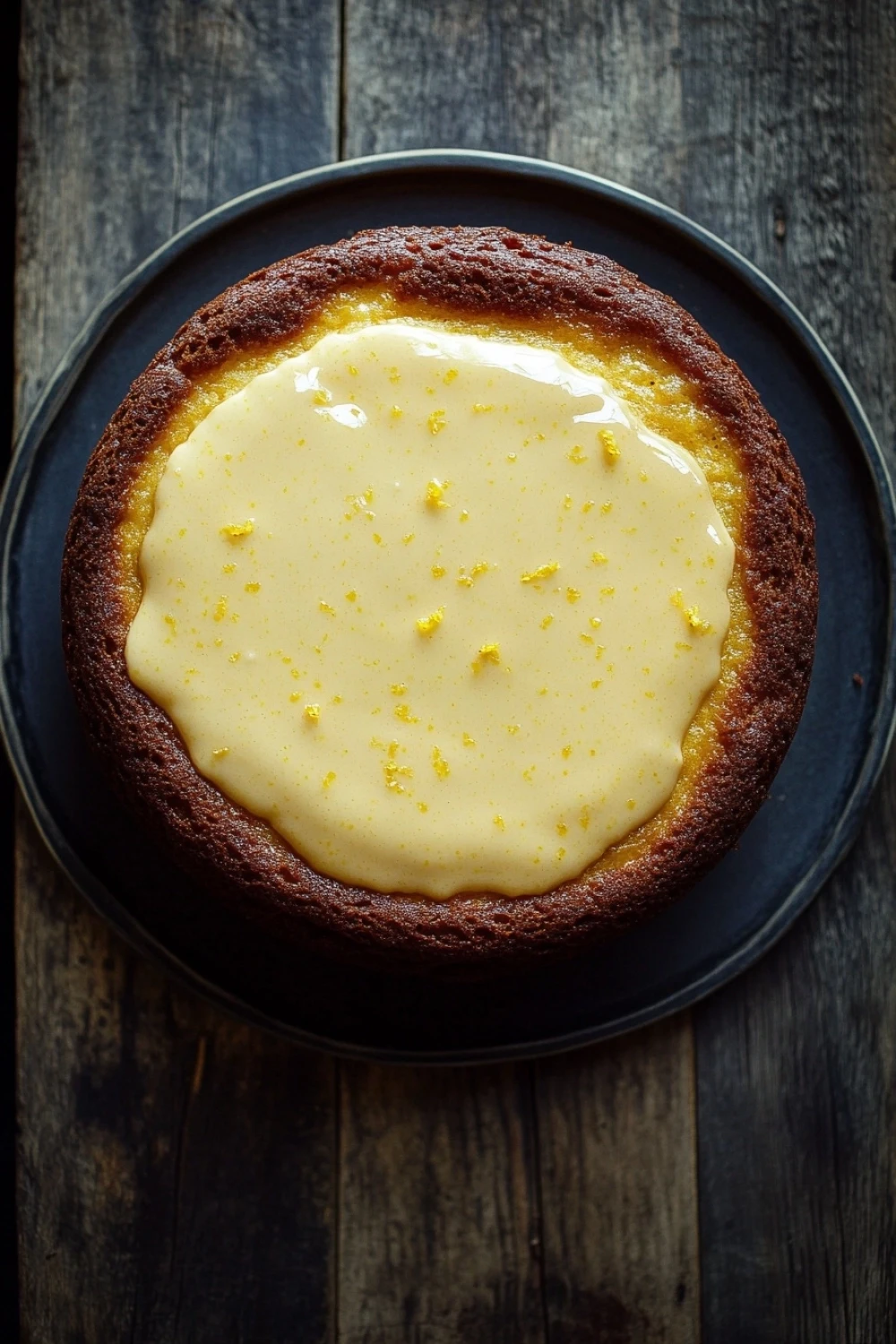
There’s something about the kitchen on a lemon cake day that sparks a particular kind of buzz. The air fills with the sharp zing of lemon zest, cutting through the usual hum of whisks and mixers. I remember the first time I tried layering a pudding over cake — felt like walking a tightrope, but when it works? Oh boy, it’s worth every second. This lemon cake topped with a luscious lemon pudding isn’t just a dessert; it’s a two-step dance of textures and tartness. The cake itself is moist and tender, playing the reliable base note, while the pudding layer swoops in with a creamy, tangy punch that wakes up the taste buds like a splash of cold water on a hot day. I’m not one to mess around with half-measures in the kitchen, so getting that pudding thickness just right—smooth, not gloopy—is key. As it bakes, the batter and pudding meld together, creating a slick top layer that’s as inviting to the eyes as it is to the palate. This recipe isn’t for the faint-hearted or the hurried—patience in letting it cool is the secret handshake. Serve it up, and watch the crowd go hush, fork poised mid-air. Trust me, this one’s a showstopper in any dessert lineup.
If you’re a fan of lemon cake and pudding, you’ll definitely want to check out A Sunday Afternoon with Yellow Lemon Cake Design That Brightened Everything for some bright and delightful inspiration.
Why This Lemon Cake Lemon Pudding Works Wonders in Real Life
- Quick prep, big payoff: You get a fresh dessert on the table in under an hour—perfect for last-minute guests or when your sweet tooth kicks in unexpectedly.
- Two textures, one pan: The moist cake base with that tangy pudding top gives a slick combo without extra bowls or fuss—clean-up doesn’t stand a chance!
- Bright citrus hit: The lemon zest and juice punch through the richness, keeping things lively and not too heavy—a win when you want something that feels light but still satisfying.
- Make-ahead friendly: Bake it, stash it in the fridge, and it actually tastes better the next day as the flavors meld—talk about kitchen efficiency.
- Kid-approved tang: That creamy pudding on top has just enough zing to sneak some real fruit goodness onto the plate without the usual kiddo protests.

Lemon Cake Lemon Pudding
Total Time: 55 minutes
Yield: 8 1x
Description
A delightful lemon cake topped with a tangy lemon pudding layer, combining moist cake with a creamy citrus topping for a refreshing dessert.
Ingredients
Scale
1 cup all-purpose flour
1 teaspoon baking powder
1/4 teaspoon salt
1/2 cup unsalted butter, softened
3/4 cup granulated sugar
2 large eggs
1/4 cup whole milk
2 tablespoons freshly grated lemon zest
1/4 cup freshly squeezed lemon juice
1 teaspoon vanilla extract
3/4 cup granulated sugar (for pudding layer)
2 tablespoons cornstarch
1 1/4 cups whole milk (for pudding layer)
3 large egg yolks (for pudding layer)
1/4 cup freshly squeezed lemon juice (for pudding layer)
1 tablespoon unsalted butter (for pudding layer)
Instructions
Preheat the oven to 350°F (175°C). Grease a 9-inch round cake pan and set aside.
In a medium bowl, whisk together the all-purpose flour, baking powder, and salt. Set aside.
In a large bowl, using an electric mixer, cream the softened butter and 3/4 cup granulated sugar until light and fluffy, about 3 minutes.
Add the eggs one at a time, beating well after each addition.
Mix in the lemon zest, lemon juice, and vanilla extract until combined.
Alternately add the flour mixture and 1/4 cup milk to the butter mixture, beginning and ending with the flour mixture. Mix just until combined.
Pour the batter into the prepared cake pan and smooth the top with a spatula.
Bake for 25 to 30 minutes, or until a toothpick inserted into the center comes out clean.
While the cake is baking, prepare the lemon pudding layer: In a medium saucepan, whisk together 3/4 cup granulated sugar and cornstarch.
Gradually whisk in 1 1/4 cups milk until smooth.
Place the saucepan over medium heat and cook, whisking constantly, until the mixture thickens and comes to a boil, about 5 to 7 minutes.
In a small bowl, lightly beat the egg yolks. Gradually whisk about 1/2 cup of the hot milk mixture into the yolks to temper them.
Slowly whisk the tempered yolks back into the saucepan. Continue to cook for 2 more minutes, stirring constantly.
Remove the saucepan from heat and stir in the 1/4 cup lemon juice and 1 tablespoon butter until smooth.
Once the cake is done, remove it from the oven and immediately pour the warm lemon pudding evenly over the top of the cake.
Return the cake to the oven and bake for an additional 10 minutes to set the pudding layer.
Remove from the oven and allow the cake to cool completely in the pan on a wire rack before serving.
- Prep Time: 15 minutes
- Cook Time: 40 minutes
Explore more:
Dessert Recipes
Lemon Cake Lemon Pudding: Substitution Secrets, The Science, and Real-world Fixes
Substitution Secrets
When life throws a curveball—like running out of all-purpose flour or eggs—you don’t have to toss the whole lemon cake idea out the window. For the flour, I often swap in cake flour for a softer crumb or even a gluten-free blend if someone’s riding the gluten-free train. Just remember, cake flour is a bit less dense, so you might want to use a pinch more or reduce the liquid slightly. Eggs? That’s a trickier beast. A common substitute is unsweetened applesauce or mashed banana—about 1/4 cup per egg—but here, with the pudding layer relying on yolks for richness and thickening, it’s best to stick with eggs or a commercial egg replacer to avoid a flop. Oh, and if you’re low on fresh lemons, bottled lemon juice can play understudy, but zest is another story—nothing beats that punch of fresh zest for brightness.
The Science
Understanding what’s happening under the hood can make or break your lemon cake game. The baking powder gives lift, creating carbon dioxide bubbles that expand in the oven, fluffing up the cake. The butter and sugar creaming? That’s where the tiny air pockets get trapped, lending that tender yet airy texture. The eggs bind everything and add moisture, but in the pudding layer, yolks take center stage as thickening agents thanks to their protein and fat content. When you temper the yolks—slowly whisking in hot milk—you prevent them from scrambling and instead get that silky lemon custard. Cornstarch steps in as the pudding’s backbone, absorbing liquid and swelling with heat to give that luscious, spoonable consistency. The final bake solidifies the pudding atop the cake, marrying textures in a way that’s all about timing and temperature.
Real-world Fix
Picture this: I once baked this lemon cake only to find my pudding layer refusing to set—runny and disappointing. The culprit? Rushing the tempering process and skimping on cornstarch. Lesson learned: patience isn’t just a virtue; it’s an oven rule. Slowly incorporate hot milk into the egg yolks, whisk constantly, and never underestimate cornstarch’s thickening power. Also, if your lemon pudding cracks while baking, it usually means the heat was too high or the pudding overcooked—dial down the oven for the final set and keep an eagle eye. Lastly, if your cake turns out dry, it’s tempting to slap on more lemon pudding, but it’s better to check your oven calibration and avoid overbaking—nothing kills a moist cake faster than a hot box gone rogue.
Your Lemon Cake Lemon Pudding Questions Answered
Can I use bottled lemon juice instead of fresh?
Sure, but fresh lemon juice really makes a difference here. Bottled juice can sometimes be a bit flat or too tart, so if you go that route, maybe dial back the amount slightly to keep things balanced.
Is there a way to make this cake gluten-free?
Absolutely! Swap the all-purpose flour with a gluten-free blend that’s good for baking. Just keep an eye on the texture—sometimes gluten-free flours behave a little differently, so don’t overmix.
How do I know when the pudding layer is set enough?
Once you pour the pudding over the warm cake and pop it back in the oven, the 10-minute bake should set it nicely. The pudding will firm up but still have a slight wobble—think of it like a gentle jiggle, not rock solid.
Can I prepare the lemon pudding layer ahead of time?
Technically yes, but I prefer making it fresh while the cake bakes. The pudding tastes best warm and freshly poured—it’s kinda like catching lightning in a bottle. If you do prep ahead, let it cool and then gently rewarm before spreading.
What’s the best way to store leftovers without drying out the cake?
Keep it covered tightly in the fridge—plastic wrap or an airtight container will do. This keeps the cake moist and stops the pudding layer from developing a skin. And don’t forget, it’s just as tasty chilled or lightly warmed up.