
Just wait for it.
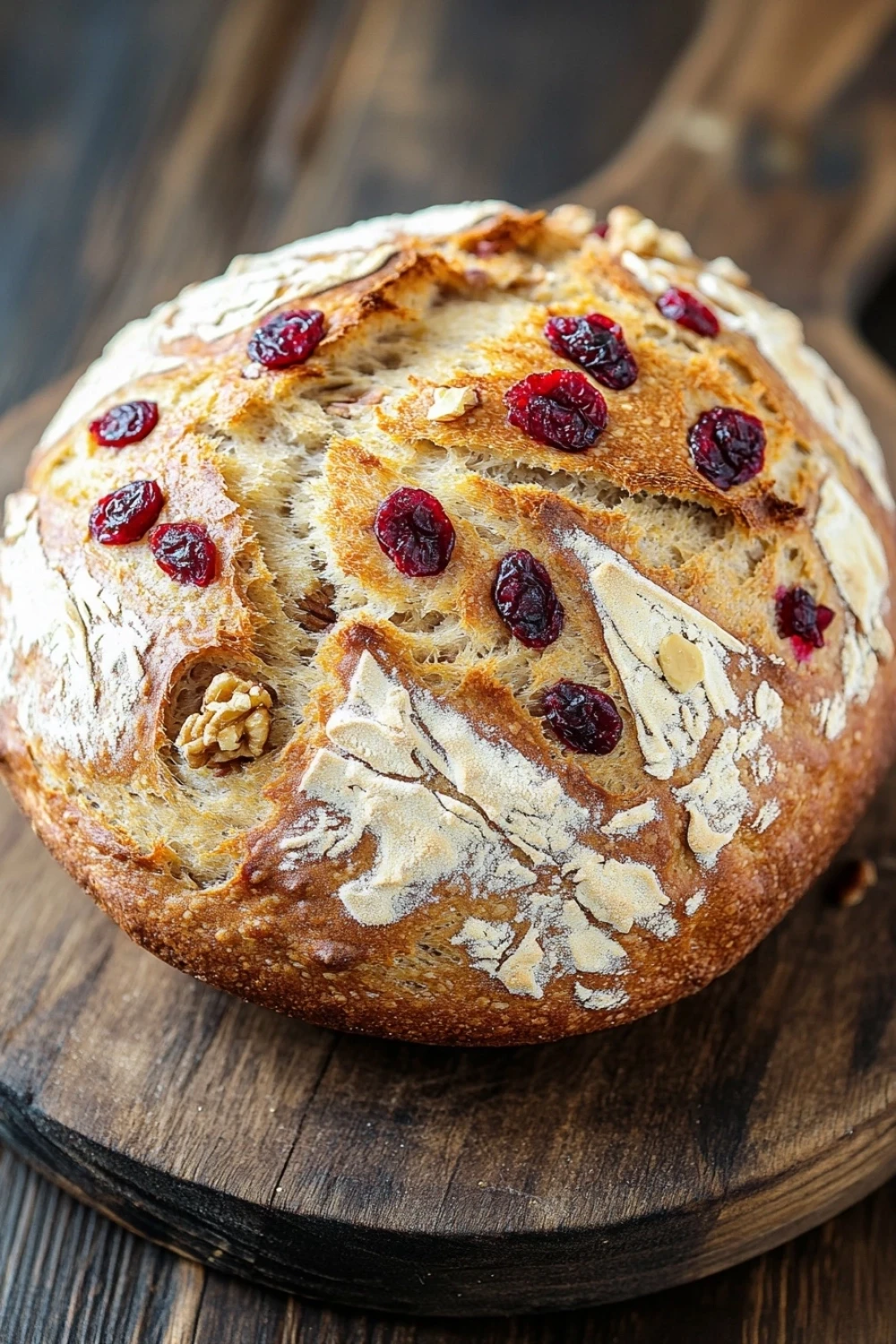
There’s something oddly satisfying about watching a shaggy, sticky dough transform over twelve hours into a crusty, aromatic loaf. I remember the first time I tried this no knead cranberry walnut bread — my kitchen smelled like autumn had crashed the party. The cranberries pop with tartness, while the walnuts add a hefty crunch that keeps you coming back for more.
No heavy lifting required here. Unlike traditional bread, this recipe skips the elbow grease and plays the long game, relying on time and a hot Dutch oven to work its magic. The dough looks like a mess, but don’t let that scare you — the magic lies in the slow rise and the final bake.
Trust me, pulling this loaf from the oven, its crust crackling like a campfire, is the kind of moment that makes the wait worthwhile. Slice it thick, slather with butter, and enjoy. Bread making doesn’t have to be a pain—sometimes, it’s as easy as letting the dough do the legwork.
If you’re looking to complement your meal, don’t miss our recipe for A Cozy Night In with a Turkey Dinner with Stuffing to Savor that pairs wonderfully with no knead bread cranberry walnut.
Why This No Knead Cranberry Walnut Bread Wins Every Time
- Zero kneading means less elbow grease—perfect for busy mornings or lazy weekends.
- Overnight rise develops deep, tangy flavor that punches well above its weight.
- Tart cranberries and crunchy walnuts add layers of texture and a snackable vibe.
- Versatile as heck: rock it with butter, sandwich it, or dunk in soup.
- Freezer-friendly slices save you from the dreaded stale bread scenario—grab and go anytime.
No Knead Cranberry Walnut Bread
- Total Time: 12 hours 0 minutes
- Yield: 10 slices 1x
Description
A rustic and flavorful no knead bread studded with tart dried cranberries and crunchy walnuts. Perfect for breakfast, sandwiches, or as a snack with butter.
Ingredients
3 cups (360 grams) all-purpose flour
1/4 teaspoon instant yeast
1 1/4 teaspoons salt
1 1/2 cups (360 ml) warm water
3/4 cup (90 grams) dried cranberries
3/4 cup (90 grams) chopped walnuts
Instructions
In a large mixing bowl, whisk together the flour, instant yeast, and salt until evenly combined.
Add the warm water to the dry ingredients and stir with a wooden spoon or spatula until a shaggy dough forms and all flour is hydrated.
Fold in the dried cranberries and chopped walnuts until evenly distributed throughout the dough.
Cover the bowl tightly with plastic wrap or a clean kitchen towel and let it rest at room temperature for 12 hours, or overnight, until the surface is bubbly and the dough has risen.
After the dough has risen, generously flour a clean work surface and your hands. Turn the dough out onto the floured surface.
With floured hands, gently fold the dough over itself once or twice to shape it into a rough ball. Do not knead.
Place the dough seam side down on a large piece of parchment paper. Cover loosely with a kitchen towel and let it rest for 30 minutes while you preheat the oven.
About 30 minutes before baking, place a Dutch oven (or heavy oven-safe pot with lid) inside the oven and preheat to 450°F (230°C).
Carefully remove the hot Dutch oven from the oven. Using the parchment paper, lift the dough and place it into the Dutch oven.
Cover with the lid and bake for 30 minutes.
Remove the lid and bake for an additional 15 minutes, or until the bread is deep golden brown and crusty.
Carefully remove the bread from the Dutch oven and transfer to a wire rack to cool completely before slicing.
- Prep Time: 15 minutes
- Cook Time: 45 minutes
Explore more:
Breakfast Recipes
Mastering No Knead Cranberry Walnut Bread: Tips, Tricks & Fixes
The Magic Behind the No Knead Method—Why It Works Wonders
Forget punching down dough or wrestling with sticky lumps. This no knead technique is all about patience and chemistry dancing together quietly overnight. The tiny amount of yeast—just a quarter teaspoon—gets plenty of time to mingle with flour and water, creating gluten strands without any elbow grease. It’s like letting the dough do its own heavy lifting, slowly building structure and flavor while you sleep. The 12-hour rest isn’t just a nap; it’s the secret handshake between flour proteins and water molecules, resulting in that perfect chewy crumb and crust that sings. Plus, the warm water jumpstarts fermentation, ensuring the yeast wakes up and gets busy right away. For folks new to this method, remember: dough looks shaggy and loose, but that’s exactly how it should be before shaping. Those bubbles on the surface? Proof you’re on the right track—your dough’s alive and kicking.
Ingredient Swaps That Don’t Kill the Vibe
Wanna switch things up? Go nuts (literally) but keep the balance. Walnuts can be swapped for pecans or even toasted almonds if you want a different crunch profile—just maintain that 3/4 cup volume so you don’t turn the dough into a nutty brick. Cranberries? Fresh or frozen? They’ll throw off your moisture balance, so stick to dried or give them a quick toss in flour before folding in to avoid sinking to the bottom. If you’re out of all-purpose flour, bread flour is your best bet—it’ll add a bit more chew without breaking the bank. Whole wheat? Sure, but dial back to 1 or 1 ½ cups max and compensate with more water; whole wheat soaks up liquid like a sponge. Pro tip: tossing the nuts and cranberries in a tablespoon of flour before folding helps keep them suspended evenly, so every bite hits the jackpot.
Saving a Sad Dough: How to Fix Common No-Knead Mishaps
Ever open your bowl after 12 hours and see a dough that’s flat or overly wet? Don’t toss it—here’s the lowdown:
- Flat dough: The yeast might be on the fritz or your kitchen is too cold. No worries. Give it a little extra time—up to 16 hours can work—and keep it in a slightly warmer spot (think near the oven or a sunny window).
- Overly wet or sticky dough: This loaf is more of a shaggy mess, but that’s okay. Flour your hands and work surface generously before folding. The dough is forgiving if handled gently.
- Lack of bubbles: That’s the yeast slacking off. Double-check your yeast freshness next time. For now, just let the dough rest longer.
Remember—no knead isn’t no effort. It’s low effort with high payoff, but patience is your best friend here. Don’t rush the rise or skip the preheating of your Dutch oven. The hot pot is what creates that crispy crust that’s the bread’s claim to fame. If it sticks, slide a thin spatula around the edges or dust your parchment with extra flour beforehand. This bread is as forgiving as that friend who always has your back after a rough day—handle it right, and it’ll show up to the table looking fly every time.
No Knead Cranberry Walnut Bread FAQ
- Is this bread hard to make?
- Nope! It’s foolproof. Mix, wait, bake—done. No fancy moves, no elbow grease needed.
- Can I swap walnuts for another nut?
- Absolutely. Pecans or hazelnuts work great if you want a different crunch. Just chop roughly and fold in like the walnuts.
- Why does the dough need 12 hours to rise?
- Slow and steady wins the race here. The long rest lets the yeast work its magic gently, developing flavor and that airy texture without kneading. It’s a bit of patience paying off big time.
- Do I really need a Dutch oven?
- Yes, using a Dutch oven traps steam which creates that coveted crusty crust. No Dutch oven? Use a heavy oven-safe pot with a lid or try adding a pan of water to the oven for steam.
- Can I add fresh cranberries instead of dried?
- Not recommended. Fresh berries have too much moisture and will mess with the dough consistency. Stick to dried for the right chew and tart burst.