
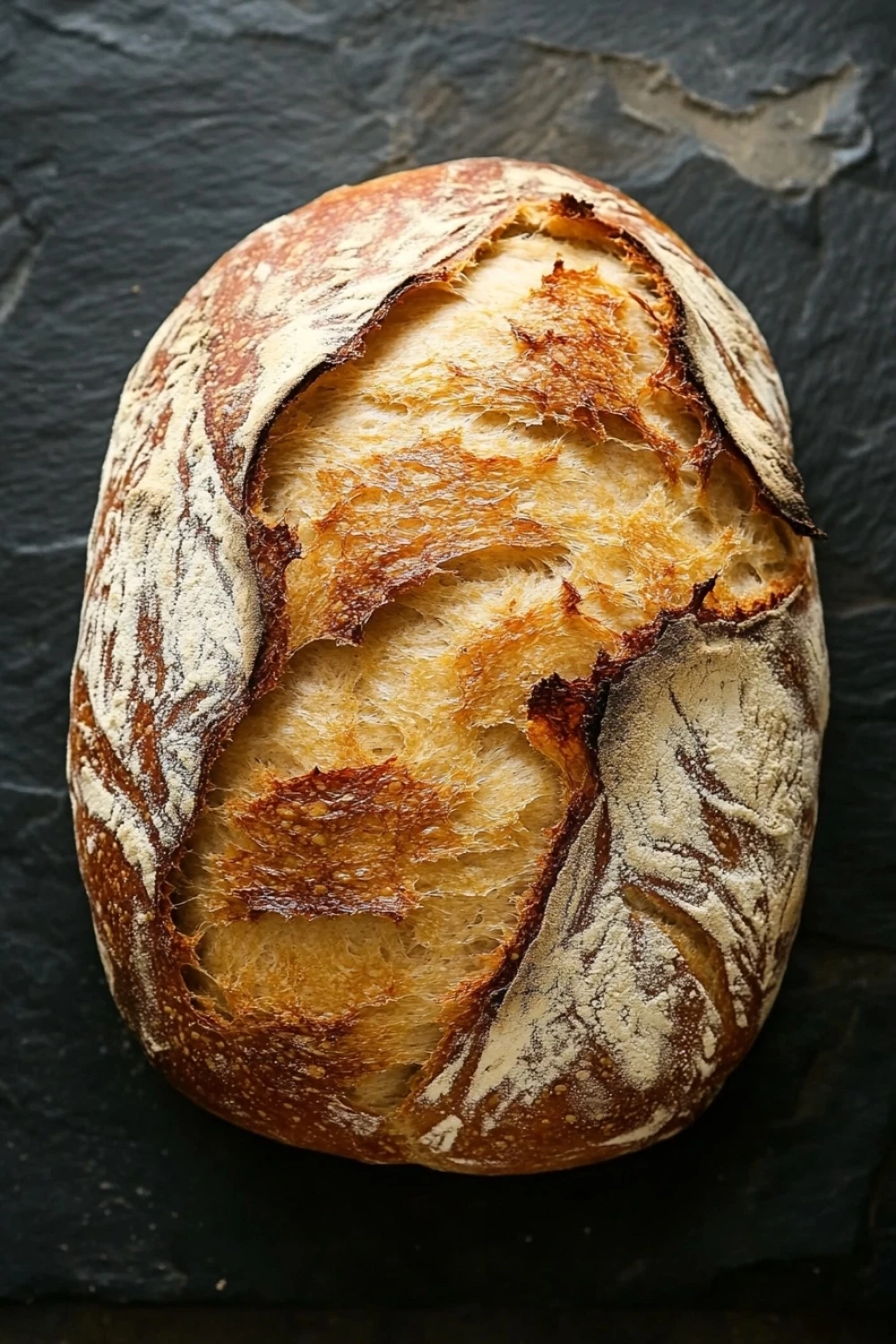
There’s something irresistibly satisfying about baking bread from scratch—especially when it’s a no-fuss recipe that uses sourdough discard. I remember the first time I tried this method; staring at my fridge, I felt a pang of guilt tossing that bubbly starter sludge. But turning that discard into a crusty loaf changed the game. The kitchen fills with an intoxicating aroma that’s a little tangy, a little yeasty, and all kinds of comforting. This recipe is a straightforward, hands-on way to transform what’s often wasted into a loaf boasting a crisp crust with a tender crumb inside—no complex feedings or lengthy fermentations required. It’s the kind of bread you slice thick, slather with butter, and maybe slap a little jam on top for a quick morning fix. The dough is forgiving, the process approachable, and best of all, it lets you turn sourdough scraps into something truly worth sinking your teeth into. So, let’s roll up those sleeves and get this bread party started—your discard’s about to become the star of the show.
If you love using bread sourdough discard in delicious ways, you might also enjoy cozying up with some garlic bread and tomato soup on those chilly evenings. Check out this comforting combo here!
Why You’ll Keep Coming Back to Sourdough Discard Bread
- Waste Not, Want Not: This recipe turns that pesky sourdough discard—usually tossed—into a seriously tasty loaf. No more starter guilt here.
- Quick Turnaround: Unlike traditional sourdough, you get a crusty, tender bread in under two hours. Perfect for when you’re craving fresh bread but short on patience.
- Hands-On Satisfaction: Kneading and shaping the dough is a legit stress buster—plus, you get to play artisan baker without the fuss of long fermentation.
- Multi-Use Marvel: This bread shines toasted with jam, slathered with butter, or as the backbone for a killer sandwich. Keeps your taste buds on their toes.
- Room Temperature Friendly: No weird fridge rituals needed. Just store it right and enjoy—fresh bread vibes for days (or freeze for later hustle).
Sourdough Discard Bread
Total Time: 1 hour 55 minutes
Yield: 8 1x
Description
A simple and delicious bread recipe that uses sourdough discard to create a flavorful loaf with a crisp crust and tender crumb. Perfect for reducing waste and enjoying homemade bread without the full sourdough process.
Ingredients
Scale
1 cup active sourdough discard (unfed starter)
2 1/2 cups all-purpose flour
1 teaspoon instant yeast
1 teaspoon salt
1 cup warm water (about 110°F)
1 tablespoon olive oil
Instructions
In a large mixing bowl, combine the sourdough discard, warm water, and olive oil. Stir to combine.
Add the all-purpose flour, instant yeast, and salt to the bowl. Mix until a rough dough forms.
Turn the dough onto a lightly floured surface and knead for about 8-10 minutes until smooth and elastic.
Place the dough in a lightly oiled bowl, cover with a clean kitchen towel or plastic wrap, and let it rise in a warm place for 1 hour or until doubled in size.
Preheat the oven to 425°F (220°C).
Punch down the dough and shape it into a round loaf. Place the loaf on a parchment-lined baking sheet or a floured proofing basket.
Cover the loaf and let it rest for 20 minutes.
Using a sharp knife, score the top of the loaf with 2-3 shallow slashes.
Bake the bread in the preheated oven for 35-40 minutes, or until the crust is golden brown and the loaf sounds hollow when tapped on the bottom.
Remove the bread from the oven and let it cool completely on a wire rack before slicing.
- Prep Time: 15 minutes
- Cook Time: 40 minutes
Explore more:
Breakfast Recipes
Mastering Sourdough Discard Bread: Substitutions, Science, and Fixes
Substitution Secrets
When you’re knee-deep in sourdough discard bread making, flexibility becomes your best friend. Say you don’t have instant yeast on hand—no sweat. You can swap it out for active dry yeast, but here’s the kicker: activate it first in the warm water with a pinch of sugar before mixing. Otherwise, you’ll be twiddling your thumbs waiting for the dough to rise like a stubborn soufflé that just won’t puff. Also, olive oil plays a subtle but crucial role—it tenderizes the crumb and helps with crust color. If you’re fresh out, a neutral oil like canola will do, but steer clear of heavy oils that might throw off the balance (hello, sesame oil!). And speaking of flour, while the recipe calls for all-purpose, I’ve had great luck sneaking in some whole wheat for a nuttier vibe—just don’t go beyond 20% or the loaf gets dense and sad.
The Science
Here’s the lowdown: sourdough discard isn’t just a waste-buster—it’s a flavor and texture booster. The discard contains natural acids and wild yeasts, which mingle with the instant yeast to speed up fermentation while adding complexity. The warm water (around 110°F) hits the sweet spot—too cold and yeast takes a nap; too hot and you’re nuking the little buggers. Kneading for 8-10 minutes develops gluten strands, giving the dough that stretch and bounce, which translates to a tender crumb with a slight chew. The final oven spring is a result of those gases trapped during fermentation expanding rapidly under heat, which is why scoring is non-negotiable—it controls where the bread will bloom instead of bursting haphazardly.
Real-world Fix
Let me tell you, not every loaf comes out picture-perfect—and that’s okay. If your sourdough discard bread turns out dense or flat, odds are your yeast was on vacation (expired or inactive). Always proof your yeast first if uncertain. Another common hiccup is a dough too sticky to handle; that’s usually because of too much water or not enough flour. Resist the urge to dump more flour blindly—try dusting just a touch and knead longer to develop gluten. If the crust is too tough post-baking, you might have overbaked or your oven runs hot—invest in an oven thermometer, it’s a game changer. Finally, if the bread is gummy inside, it probably didn’t bake long enough or needed more time to cool down. Patience is the unsung hero here—cutting into hot bread is tempting but premature. Let it rest on a wire rack and watch it finish its transformation.
Sourdough Discard Bread FAQs
Sourdough Discard Bread FAQs
- Can I use old sourdough discard for this recipe?
- Absolutely. As long as your discard isn’t moldy or smelling off, it works fine. It’s a great way to keep the starter waste-free without sacrificing flavor.
- Why add instant yeast if I’m using sourdough discard?
- Good question! Discard alone won’t rise efficiently on a tight timeline. The instant yeast gives your bread that reliable lift, so you’re not waiting all day.
- What’s the secret to a crispy crust?
- Don’t skip preheating the oven to 425°F and scoring the dough. The slashes let steam escape—think of it as the bread’s way of breathing. Plus, baking on parchment keeps the bottom from burning.
- Can I swap olive oil for something else?
- Sure thing. Butter or any neutral oil works here. Olive oil adds a subtle flavor I dig, but it’s your loaf to make.
- How do I store leftovers without turning the bread into a brick?
- Store it in an airtight container at room temp for a few days. For anything longer, slice and freeze. Toasting straight from frozen brings it back almost fresh.