
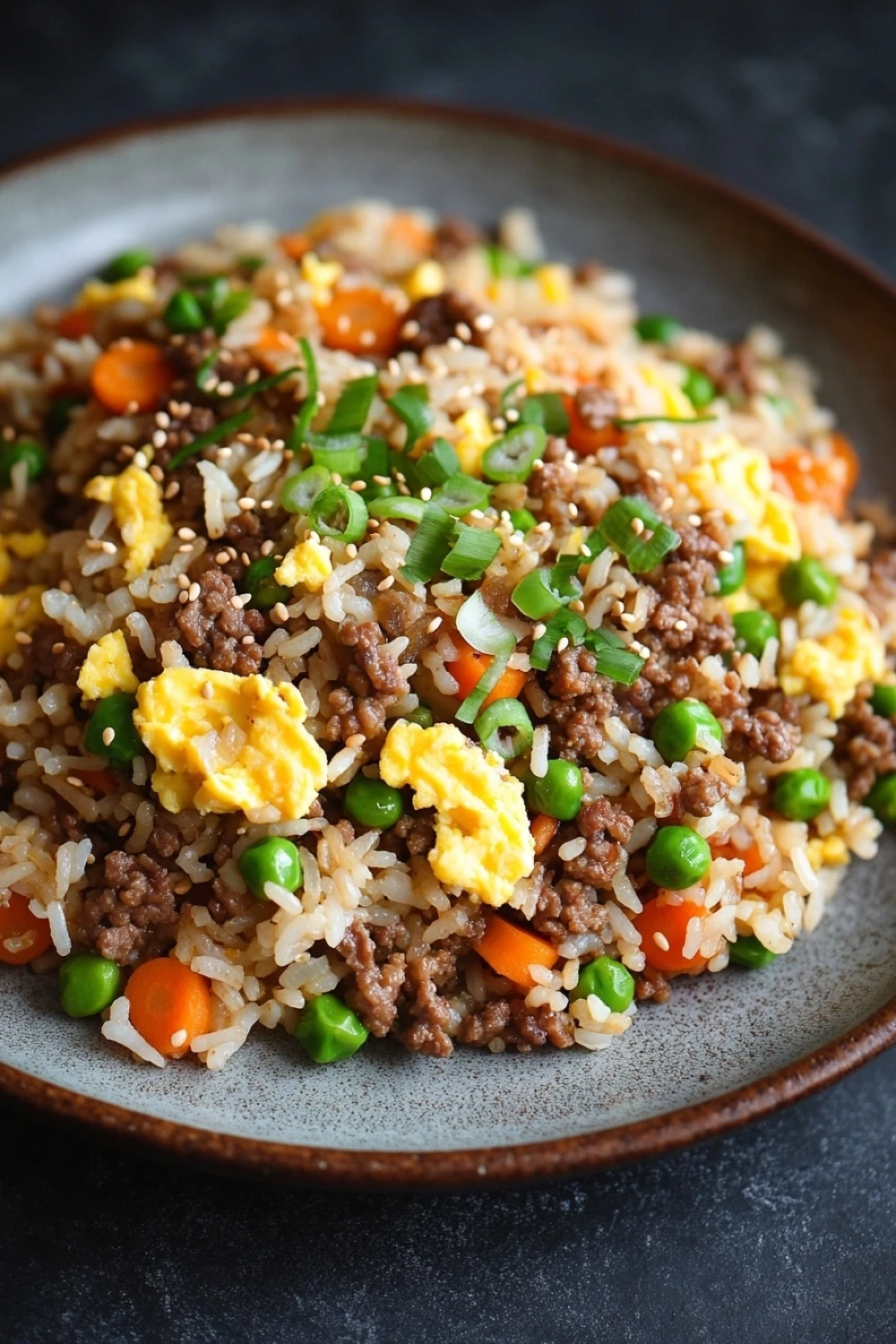
Nothing beats rocking the wok on a busy night.
The sizzle of lean ground beef hitting hot oil—pure kitchen jazz. I’m talking about a dish that’s as bold as gochujang’s fiery kick yet packed with enough protein to fuel any hustle. This Korean beef fried rice isn’t just some throw-together; it’s a knockout combo of textures and flavors, from tender carrots to the pop of fresh peas.
In my kitchen, the secret lies in timing and layering. Onions and garlic hit the skillet first, releasing that aromatic buzz, while eggs scramble in a corner, folding into the beef with effortless charm. Toss in chilled jasmine rice to keep it from turning mushy—this step truly separates the rookies from the pros.
This recipe isn’t just a meal; it’s a quick, satisfying win when the clock’s ticking and you want something hearty without the fuss. Trust me, once you nail this, you’ll be telling your friends you’re a bona fide fried rice ninja.
For a quick and delicious meal, try our When Weeknight Hunger Hits: Korean Beef Skillet Ready in 25 Minutes recipe, perfect for a high protein Korean beef fried rice fix.
Real Life Wins from Cooking High Protein Korean Beef Fried Rice
- Whips up in under 30 minutes—perfect for those midnight cravings or a quick weeknight throwdown.
- Lean ground beef packs a serious protein punch, keeping you fueled without the grease bomb aftermath.
- Gochujang sauce? That spicy-sweet kick awakens your taste buds, no bland desk lunch here.
- Chilled jasmine rice keeps the grains separate and fluffy—no mushy mess, just straight-up wok magic.
- Veggies sneak in some fiber and crunch, so you’re not just eating meat and rice all day long.
High Protein Korean Beef Fried Rice
- Total Time: 25 minutes
- Yield: 4 1x
Description
A flavorful and protein-packed Korean beef fried rice made with lean ground beef, vegetables, and a savory gochujang sauce. Perfect for a quick and satisfying meal.
Ingredients
2 cups cooked jasmine rice, chilled
1 pound lean ground beef (90% lean)
1 tablespoon vegetable oil
1 medium yellow onion, finely chopped
3 cloves garlic, minced
1 medium carrot, peeled and diced
1 cup frozen peas, thawed
3 large eggs, beaten
3 tablespoons gochujang (Korean chili paste)
2 tablespoons low sodium soy sauce
1 tablespoon sesame oil
2 green onions, thinly sliced
1 tablespoon toasted sesame seeds
Salt, to taste
Freshly ground black pepper, to taste
Instructions
Heat vegetable oil in a large skillet or wok over medium-high heat.
Add the finely chopped onion and diced carrot to the skillet and sauté for 3-4 minutes until softened.
Add the minced garlic and cook for 30 seconds until fragrant.
Add the lean ground beef to the skillet and cook, breaking it apart with a spatula, until fully browned and cooked through, about 5-6 minutes.
Season the beef mixture with salt and freshly ground black pepper to taste.
Push the beef and vegetable mixture to one side of the skillet. Pour the beaten eggs into the empty side and scramble until just set, about 1-2 minutes.
Mix the scrambled eggs into the beef and vegetables.
Add the chilled cooked rice to the skillet. Stir well to combine all ingredients evenly.
In a small bowl, whisk together the gochujang, soy sauce, and sesame oil.
Pour the sauce over the rice mixture and stir thoroughly to coat everything evenly.
Add the thawed peas and cook for an additional 2 minutes, stirring frequently until heated through.
Remove the skillet from heat and stir in the sliced green onions.
Transfer the Korean beef fried rice to serving plates and sprinkle with toasted sesame seeds before serving.
- Prep Time: 10 minutes
- Cook Time: 15 minutes
Explore more:
Dinner Recipes
High Protein Korean Beef Fried Rice: Tricks and Fixes
The Secret to That Perfect Protein Punch
Lean ground beef is the MVP here—90% lean hits the sweet spot between flavor and fat content. Using anything fattier? You’ll end up with a greasy mess that sogs your rice like a wet blanket. Too lean, and it turns into rubber city—dry, dense, and sad. I always remind myself: juicy but not sloppy. You want those browned bits—the Maillard reaction working overtime—caramelizing little beef nuggets that punch up the umami without drowning the dish in grease. Pro tip? Don’t crowd the pan. Sear in batches if necessary. It’s the difference between a good stir-fry and a steamed stew in disguise.
Why Chilled Rice Is Your Best Wingman
Here’s the lowdown: freshly cooked rice is like a clingy ex—it’s moist, sticky, and just won’t let go. That stickiness kills your fry game, turning your dish into a mushy mess. Chilling the rice overnight? Game changer. The grains firm up, giving you that coveted “fried rice” texture—each grain like a tiny separate pearl. When I whip this up, I sometimes spread the rice on a tray to cool fast before refrigerating. Then, when it hits the hot skillet, it crisps up just right. Remember, patience is key. Tossing warm rice straight into the pan is a rookie mistake that can ruin even the best sauce.
Fixing the Common Gochujang Glitch
Okay, so you’ve added your gochujang sauce, but the balance is off—too spicy or too salty? Happens to the best of us. The secret? Layer it in gently, tasting as you go. If things swing too hot, a splash of cold water or a drizzle of honey will chill the fire. Too salty? Toss in a few more peas or a handful of diced carrot to absorb that salt bomb. And if your rice looks a little clumpy after adding the sauce, splash a teaspoon of sesame oil and break it apart with your spatula—this slick move avoids rice clumps and boosts that nutty aroma. Trust me, throwing in green onions at the very end isn’t just for looks—it adds a fresh bite that cuts through the richness and resets your palate.
FAQs About High Protein Korean Beef Fried Rice
- Can I use brown rice instead of jasmine?
- Absolutely! Brown rice adds a nuttier flavor and extra fiber, making this dish even heartier. Just ensure the rice is cooked and chilled before frying—cold rice keeps the grains separate instead of clumping.
- Is the gochujang sauce very spicy?
- It has a kick, but nothing that’ll blow your socks off unless you pile it on. Gochujang brings a balanced heat with a touch of sweetness—perfect if you like your food with a mild to medium punch.
- Can I make this vegetarian?
- Yes, swap the ground beef for crumbled tofu or tempeh. Sauté it the same way to soak up all those flavors. You won’t miss the meat one bit.
- Do I have to use sesame oil?
- Nope, but it adds that signature nutty aroma that seals the deal. If you’re out, a neutral oil works, but the dish might feel a bit flat without it.
- Can I meal prep this?
- Yes. Store in airtight containers and it’ll keep well for up to 3 days. Reheat gently, stirring occasionally to avoid drying out. It’s a solid go-to when you want a quick protein fix.